














-
Family Communication and Cultural Transformation: (Re)Awakening Legacies of Equality, Social Justice, Freedom, and Hope
2023Rhunette C. Diggs (Editor) and Thomas J. Socha (Editor)
Building on their past work in race and family communication, Rhunette C. Diggs and Thomas J. Socha gather in this volume contemporary theory and research concerning ways that families use communication to transform inherited cultural legacies for the better (Communication 3.0).
The book expands the field of communication’s understanding of the life-long impact that family communication has on the managing diverse and clashing cultural relationships, identities, meanings, and communication practices. It spotlights the economically disenfranchised alongside the economically secure, the systematically oppressed next to beneficiaries of Whiteness, and those actually or metaphorically killed and or threatened by violence and hateful systems outside of home. Together, the contributions address omissions of diverse family contexts in family communication research and reconsider qualitative and quantitative approaches that bring respect and equality to the participant-researcher relationship.
This book is suitable as a supplementary text for courses in family communication, family studies, race and ethnicity in communication, and intergroup communication.
-
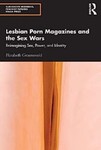
Lesbian Porn Magazines and the Sex Wars: Reimagining Sex, Power, and Identity
2023Elizabeth Groeneveld
Lesbian Porn Magazines and the Sex Wars re-examines the heated debates about the politics of sexuality known as the sex wars, investigating how they were fundamentally engaged in the complex intersections of gender, race, class, and sexuality.
Groeneveld presents an accessible and fascinating framing of lesbian sex magazines as activist media texts engaged in education, community building, and dialogue, amplifying theories or writers and artists across the intersectional spectrum. Making use of archival material and a cohort of lesbian radical porn magazines, the book posits that collectively these magazines helped create and circulate new ideas about sex, power, and identity. The chapters cover lesbian public culture, trans self-representation, AIDS activism, and issues of consent.
This is an essential intervention into sexuality studies and is suitable for students and scholars in gender and sexuality studies, sociology, media studies, literature, and cultural studies. [From the publisher]
-
Exploring Extended Realities: Metaphysical, Psychological, and Ethical Challenges
2023Andrew Kissel (Editor) and Erick José Ramirez (Editor)
This volume highlights interdisciplinary research on the ethical, metaphysical, and experimental dimensions of extended reality technologies, including virtual and augmented realities. It explores themes connected to the nature of virtual objects, the value of virtual experiences and relationships, experimental ethics, moral psychology in the metaverse, and game/simulation design.
Extended reality (XR) refers to a family of technologies aiming to augment (AR) or virtually replace (VR) human experience. The chapters in this volume represent cutting-edge research on XR experiences from a wide range of approaches including philosophy, psychology, Africana studies, and cognitive sciences. They are organized around three guiding questions. Part 1, “What is Extended Reality?”, contains a series of chapters examining metaphysical questions about virtual objects, actions, and worlds. Part 2, “Is There an Ethics for Extended Realities?”, includes chapters that address ethical questions that arise within XR experiences. Finally, Part 3, “What Can We Do with Extended Realities?”, features chapters from a diverse group of social scientists on the potential uses of XR as an investigative and educational tool, including its strengths and pitfalls. [From the publisher]
-
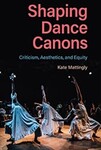
Shaping Dance Canons: Criticism, Aesthetics, and Equity
2023Kate Mattingly
Dance criticism has long been integral to dance as an art form, serving as documentation and validation of dance performances, yet few studies have taken a close look at the impact of key critics and approaches to criticism over time. The first book to examine dance criticism in the United States across 100 years, from the late 1920s to the early twenty-first century, Shaping Dance Canons argues that critics in the popular press have influenced how dance has been defined and valued, as well as which artists and dance forms have been taken most seriously.
Kate Mattingly likens the effect of dance writing to that of a flashlight, illuminating certain aesthetics at the expense of others. Mattingly shows how criticism can preserve and reproduce criteria for what qualifies as high art through generations of writers and in dance history courses, textbooks, and curricular design. She examines the gatekeeping role of prominent critics such as John Martin and Yvonne Rainer while highlighting the often-overlooked perspectives of writers from minoritized backgrounds and dance traditions. The book also includes an analysis of digital platforms and current dance projects—On the Boards TV, thINKingDANCE, Black Dance Stories, and Amara Tabor-Smith’s House/Full of BlackWomen—that challenge systemic exclusions. In doing so, the book calls for ongoing dialogue and action to make dance criticism more equitable and inclusive. [From Amazon.com]
-
Unbroken: The Trauma Response Is Never Wrong: And Other Things You Need to Know to Take Back Your Life
2023MaryCatherine McDonald
For centuries, we’ve been taught that being traumatized means we are somehow broken—and that trauma only happens to people who are too fragile or flawed to deal with hardship. But as a researcher, teacher, and survivor, Dr. MaryCatherine McDonald has learned that the only thing broken is our society’s understanding of trauma. “The body’s trauma response is designed to save our lives—and it does,” she says. “It’s not a sign of weakness, but of our function, strength, and amazing resilience.”
With Unbroken: The Trauma Response Is Never Wrong, Dr. McDonald overturns the misconceptions about trauma with the latest evidence from neuroscience and psychology—and shares tested practices and tools to help you work with your body’s coping mechanisms to accelerate healing. [From the publisher]
-
The Bloomsbury Handbook of Food and Material Cultures
2023Irina D. Mihalache (Editor) and Elizabeth Zanoni (Editor)
Cookbooks. Menus. Ingredients. Dishes. Pots. Kitchens. Markets. Museum exhibitions. These objects, representations, and environments are part of what the volume calls the material cultures of food. The book features leading scholars, professionals, and chefs who apply a material cultural perspective to consider two relatively unexplored questions: 1) What is the material culture of food? and 2) How are frameworks, concepts, and methods of material culture used in scholarly research and professional practice?
This book acknowledges that materiality is historically and culturally specific (local), but also global, as food both transcends and collapses geographical and ideological borders. Contributors capture the malleability of food, its material environments and “stuff,” and its representations in media, museums, and marketing, while following food through cycles of production, circulation, and consumption. As many of the featured authors explore, food and its many material and immaterial manifestations not only reflect social issues, but also actively produce, preserve, and disrupt identities, communities, economic systems, and everyday social practices.
The volume includes contributions from and interviews with a dynamic group of scholars, museum and information professionals, and chefs who represent diverse disciplines, such as communication studies, anthropology, history, American studies, folklore, and food studies. [From the publisher]
-
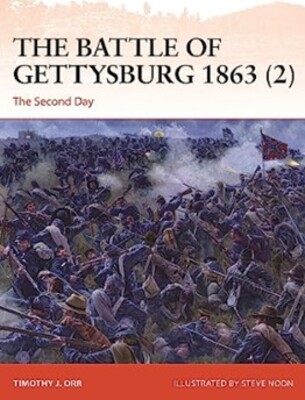
The Battle of Gettysburg 1863 (2): The Second Day
2023Timothy J. Orr and Steve Noon (Illustrator)
This work provides an authoritative illustrated examination of the second day of the Battle of Gettysburg, analyzing both grand strategy, and the tactical decisions of Day Two and the ensuing combat. July 2, 1863 was the bloodiest and most complicated of the three days of the Battle of Gettysburg. On this day, the clash involved five divisions of Confederate infantry and their accompanying artillery battalions, as well as a cavalry skirmish at nearby Hunterstown. The bulk of the Union army engaged on the second day of fighting, including men from the 2nd, 3rd, 5th, 6th, 11th and 12th Corps.
/="/">
/="/">Assisted by superb maps and 3D diagrams, this fascinating work describes the tactical play-by-play, the customary “who did what” of the battle. Among the famous actions covered are Hunterstown and Benner's Hill, Little Round Top, Devil's Den, the Rose Wheatfield, the Peach Orchard, and Culp's and Cemetery hills. The critical decisions taken on the second day are examined in detail, and why the commanders committed to them. Gettysburg was-first and foremost-a soldier's battle, full of raw emotion and high drama, and this work also examines the experience of combat as witnessed by the rank and file, bringing this to life in stunning battle scene artworks and primary accounts from common soldiers.
-
The Road to Dungannon: Journeys in Literary Ireland
2023Michael Patrick Pearson
Chasing after a family secret--a curious silence surrounding a long-lost ancestor--led the author on a pilgrimage through the landscape, history and literature of Ireland. His journey of self-discovery, flavored by poems, stories, lore and legend, reflects his idea that literature may be the key that explains the past and reveals the present.
Serving as part memoir and part journalistic chronicle, this work offers a unique look at how memory, literature and travel shape one's definition of oneself. Also serving as a love letter to Ireland with chapters on native born authors such as James Joyce, Frank O'Connor, Seamus Heaney and more, this book explores the deeper influences of what makes a man a writer, scholar, adventurer, husband and father. [Amazon.com]
-
The Bloomsbury Handbook of Muslims and Popular Culture
2023Hussein Rashid (Editor) and Kristian Petersen (Editor)
The Bloomsbury Handbook of Muslims and Popular Culture illustrates how Muslims participate in a broad spectrum of activities. Moving beyond a framework that emphasizes ritual, legal, historical, or theological issues, this book speaks to how Muslims live in the world, in relation to their religion and the realities of the world around them.
The international team of contributors provide in-depth analysis that chronicles Islamic cultural products in regional and transnational contexts, explores dominant and emerging theories about popularization, and offers provocations in the field of religion and popular culture. The handbook is structured in six parts: spaces; appetites; performances; readings; visions; and communities.
The book explores a variety of Muslim societies and communities within the last 100 years, ranging from the Islamic presence in Latin American architecture to Muslim Anglophone hip-hop, and Muslims in modern Indian theatre. [Amazon.com]
-
Nietzsche as Metaphysician
2023Justin Remhof
This book defends the controversial view that Nietzsche is a metaphysician against a long-standing tendency to sever Nietzsche from metaphysical philosophy.
Remhof presents a metametaphysical treatment of Nietzsche’s writings to show that for Nietzsche the questions, answers, methods, and subject matters of metaphysical philosophy are not only perfectly legitimate, but also crucial for understanding the world and our place within it. The book examines aspects of Nietzsche’s thought that have received little attention in the literature, including his view of what makes metaphysics possible; his metaphysics of science; his naturalized metaphysics; how he appeals to the intuitions of readers; how he employs a priori reasoning; how he uses metaphysical grounding explanations; and how metaphysics is intertwined with topics central to his philosophical thinking, including his understanding of becoming, ethics, nihilism, life, perspective, amor fati, and eternal recurrence.
Nietzsche as Metaphysician will be of interest to scholars and advanced students working on Nietzsche and the history of metaphysics. [From the publisher]
-
Nights at the Calcutta Café
2023Peter Schulman (Editor) and Somrita Urni Ganguly (Editor)
Nights at the Calcutta Café is a result of an enriching collaboration between poets from Calcutta, Montreal, and Norfolk, VA originally curated in memory of a beloved, erstwhile Indian restaurant near Columbia University. The poems delve into issues of loneliness, poverty, belonging and of course love during the pandemic as a way of breaking geographical barriers when the world was still separated. The poems accentuate the differences between these cities but also urban commonalities that highlight global solidarity in times of great calamity. We have assembled a group of highly respected, world-wide legendary poets who have contributed to this volume and is the fruition of an on-line poetry event meant to bridge geographical boundaries and distances in the spirit of an exchange of words and ideas. [From the publisher]
-
Soul Culture: Black Poets, Books, and Questions that Grew Me Up
2022Remica Bingham-Risher
Acclaimed Cave Canem poet and essayist Remica Bingham-Risher interweaves personal essays and interviews she conducted over a decade with 10 distinguished Black poets, such as Lucille Clifton, Sonia Sanchez, and Patricia Smith, to explore the impact of identity, joy, love, and history on the artistic process. Each essay is thematically inspired, centered on one of her interviews, and uses quotes drawn from her talks to showcase their philosophies. Each essay also delves into how her own life and work are influenced by these elders.
Noting the frustrating tendency for Black artists to be pigeonholed into the confines of various frameworks and ideologies—Black studies, women’s studies, LGBTQIA+ studies, and so on—Bingham-Risher reveals the multitudes contained within Black poets, both past and present. By capturing the radical love ethic of Blackness amid incessant fear, she has amassed not only a wealth of knowledge about contemporary Black poetry and poetry movements but also brings to life the historical record of Black poetry from the latter half of the 20th century to the early decades of the 21st. Examining cultural traditions, myths, and music from the Four Tops to Beyoncé, Bingham-Risher reflects on the enduring gifts of art and community. If you’ve ever felt alone on your journey into the writing world, the words of these poets are for you. [Amazon.com]
-
Medieval Fare: Food and Culture in Medieval Iberia
2022Martha Daas
Unique in its cultural and religious makeup, medieval Iberia represented a crossroads of cultures. This crossroads was reflected in large and small ways. On a grand scale, we see the convergence of intellectual ideas and great innovations in agriculture and science. On a more intimate level, we see an intersection of cultures as reflected in habits of consumption. The acts of producing food, cooking, and eating demonstrate the political realities of the land: at times interdependent, and, at times, at odds. Food, as an archeological and anthropological tool, can help us understand a particular moment in time. In considering the nature of consumption, we may arrive at the heart of a culture. In Medieval Fare, the author explores food references found in a number of medieval Iberian texts in order to expand our knowledge of daily life in the Middle Ages. By examining the depiction of food and consumption, this pioneering study provides insight into the cultural, religious, and social complexities of medieval Iberia. [From the publisher]
-
The Time Left Between Us
2022Alicia DeFonzo
A blend of memoir, history, and oral storytelling, The Time Left between Us bridges the gap between the generation who fought World War II and the generation who has forgotten it. Alicia DeFonzo takes an unplanned visit to the Normandy beaches while staying in Paris. Her grandfather “Del” (Anthony DelRossi) had fought in World War II, and she becomes distraught after realizing how little she knows about the war and his experiences, which until then had remained largely unspoken.
Across landscapes and lifetimes DeFonzo retraces her beloved grandfather’s tour through World War II Europe. The eighty-four-year-old DelRossi recounts stories as an army combat engineer surviving major campaigns, including Normandy, St. Lo, the Bulge, Hürtgenwald, and Remagen, then liberating concentration camps. In this braided narrative, we see DeFonzo’s childhood in a traditional Italian American family with an erratic Marine Corps father and a beloved grandfather. Spanning ten years, DeFonzo’s travels and research take an unexpected detour after she inherits a Nazi Waffen-SS diary from her grandfather, and, in her final trip, returns to Germany to confront the diary owner’s family. DeFonzo’s and her grandfather’s stories merge when Del undergoes open-heart surgery and Alicia must be the one to safeguard the past. Both nostalgic and gripping, The Time Left between Us is a meditation on how deeply connected the past is to the present and how the truth—and what we remember of it—are fragmented. [Amazon.com]
-
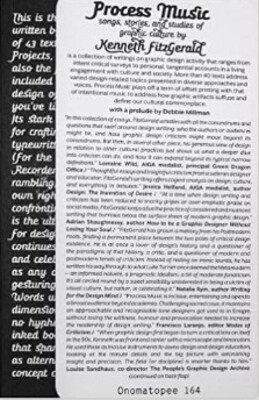
Process Music: Songs, Stories and Studies of Graphic Culture
2022Kenneth Fitzgerald and Debbie Millman (Preface)
In Process Music, Virginia-based author Kenneth FitzGerald provides deep readings of print-media artifacts and activities, often through the lens of music. Employing a range of narrative voices, the works combine academic rigor with the accessibility of popular forms such as music journalism. FitzGerald’s new book compiles over 40 of his pieces from the last decade―many of which are now inaccessible or behind a paywall―with reprinted works first appearing in outlets such as Emigre, Eye, Print, Idea, Modes of Criticism, Design Observer, Speak Up and Voice: AIGA Journal of Graphic Design. Divided into four thematic sections and a coda, Process Music considers a variety of influential figures working in design and music, including Barney Bubbles, Paul Rand, William Addison Dwiggins and Jacqueline Casey. A prelude composed by AIGA Design medalist and Design Matters host Debbie Millman also features. [Amazon.com]
-
The Oxford Handbook of Central American History
2022Robert H. Holden (Editor)
The Oxford Handbook of Central American History analyzes major themes in the historiography of this seven-nation region of Latin America. Individual chapters interpret the histories of each of the seven countries. Most concentrate on themes that cut across national boundaries, beginning with the history of the region's diverse natural environment, and continuing with the Indigenous peoples, the Spanish conquest and colonial rule, and the independence process. Nine chapters focus on region-wide problems that emerged with great salience after independence, including the economy, US relations, the armed forces, the Cold War, religion, and literature, among others. Together, the book's twenty-five chapters illuminate Central America's coherence as a region of Latin America while emphasizing its diversity within and across national boundaries. [From the publisher]
-
The United States and International Law: Paradoxes of Support Across Contemporary Issues
2022Lucretia Garcia Iommi (Editor) and Richard Maass (Editor)
The United States spearheaded the creation of many international organizations and treaties after World War II and maintains a strong record of compliance across several issue areas, yet it also refuses to ratify major international conventions like the UN Convention on the Law of the Sea and the Convention on the Elimination of All Forms of Discrimination Against Women. Why does the United States often seem to support international law in one way while neglecting or even violating it in another?
The United States and International Law: Paradoxes of Support across Contemporary Issues analyzes the seemingly inconsistent U.S. relationship with international law by identifying five types of state support for international law: leadership, consent, internalization, compliance, and enforcement. Each follows different logics and entails unique costs and incentives. Accordingly, the fact that a state engages in one form of support does not presuppose that it will do so across the board. The contributors to this volume examine how and why the United States has engaged in each form of support across twelve issue areas that are central to twentieth- and twenty-first-century U.S. foreign policy: conquest, world courts, war, nuclear proliferation, trade, human rights, war crimes, torture, targeted killing, maritime law, the environment, and cybersecurity. In addition to offering rich substantive discussions of U.S. foreign policy in each of these areas, their findings reveal patterns across the U.S. relationship with international law that shed light on behavior that often seems paradoxical at best, hypocritical at worst. The results help us understand why the United States engages with international law as it does, the legacies of the Trump administration, and what we should expect from the United States under the Biden administration and beyond. [From Amazon.com]
-
The Resistible Corrosion of Europe’s Center-Left After 2008
2022George Menz
This book examines and explains the Center-Left’s political decline since 2008, whilst analyzing the factors that account for its sagging electoral and popular support, losing voters both to the Far-Left, the Far-Right, and abstentions.
Focusing on the era since the 2008 financial crisis in particular, while also charting the historical genealogy that led to the current impasse, the book examines how, when and why the collapse of Europe’s Center-Left occurred. Moving beyond existing and slightly dated accounts, the contributors explore why Social Democrats lack compelling answers to pressing current policy challenges. Faced with a decline in its core clientele, namely blue-collar workers, the Center-Left is being outflanked and risks permanently jeopardizing its erstwhile status as representing a catch-all party. Exploring one of the more pressing and timely political puzzles of the contemporary political scene in Europe, the book identifies six factors that have driven the decline of the Left and examines them systematically across eight countries: France, the United Kingdom, Germany, Sweden, Italy, Austria, the Netherlands, and Denmark.
This book will be of particular interest to both scholars and students of social democracy, political parties, and the politics of the Left and more broadly to those interested in European and comparative politics, governance, and contemporary history. [From the publisher]
-
Contested Cures: Identity and Ritual Healing in Roman and Late Antique Palestine
2022Megan Nutzman
In the ancient Mediterranean world, individuals routinely looked for divine aid to cure physical afflictions. Contested Cures argues that the inevitability of sickness and injury made people willing to experiment with seemingly beneficial techniques, even if they originated in a foreign cultural or religious tradition. With circumstances of close cultural contacts, such as prevailed in Palestine, the setting was ripe for neighboring Jews, Samaritans, Christians, Greeks and Romans to borrow rituals perceived to be efficacious and to alter them to fit their own religious framework. As a result, they employed related means of seeking miraculous cures. The similarities of these rituals, despite changes in the identity of the divine healers that they invoked, made them the subject of polemical discourse among elite authors trying to police collective borders. Contested Cures investigates the resulting intersection of ritual healing and communal identity.
This innovative study synthesizes evidence for the full range of healing rituals that were practiced in the ancient Mediterranean world. Examining both literary and archaeological evidence, it considers ritual healing as a component of identity formation and deconstructs the artificial boundary between ‘magic’ and ‘religion’ in relation to ritual cures. [Amazon.com]
-
Battle of Gettysburg 1863 (1): The First Day
2022Timothy J. Orr and Steve Noon (Illustrator)
This first volume of three discusses the tactical decisions made on day one and the ensuing combat, while also including a brief summary of the grand strategy in the Eastern Theater of the war, the conduct of the Pennsylvania Campaign from June 6 to 30, 1863, and the plight of civilians caught up in the conflict.
This volume, the first of three to cover the battle in depth, also emphasizes the experience of combat as witnessed by the rank and file-the 'face of battle'-to borrow John Keegan's expression. Primary accounts from common soldiers remind readers that Gettysburg was-first and foremost-a soldier's battle, full of raw emotion. This superbly detailed study explores the battle chronologically; but in cases where several actions occurred simultaneously, the chapters are partitioned according to key terrain features. Among the action covered is the morning cavalry skirmish, the morning clash at the Herbst's wood lot and at the railroad cut, the afternoon clash at Oak Ridge, the afternoon fight at the Edward McPherson farm, the afternoon rout of the 11th Corps, the last stand of the 1st Corps at Seminary Ridge, the Union retreat through town, and the positions of the armies at nightfall. [Amazon.com]
-
Love and Abolition: The Social Life of Black Queer Performance
2022Alison R. Reed
In Love and Abolition, Alison Rose Reed traces how the social life of Black queer performance from the 1960s to the present animates the unfinished work of abolition. She grounds social justice–oriented reading and activist practices specifically in the movement to abolish the prison industrial complex, with far-reaching implications for how we understand affective response as a mobilizing force for revolutionary change. [From the Publisher]
-
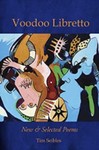
Voodoo Libretto: New & Selected Poems
2022Tim Seibles
Voodoo Libretto is in many ways a book of memories, a chronicle of both the personal and the political sensibility of a black baby-boomer. Driven by a restless and wide-ranging imagination, the poems are sometimes humorous, sometimes deadly serious, sometimes erotic, sometimes mystical, and occasionally all of these things at once. [Amazon.com]
-
Classical First-Order Logic
2022Stewart Shapiro and Teresa Kouri-Kissel
One is often said to be reasoning well when they are reasoning logically. Many attempts to say what logical reasoning is have been proposed, but one commonly proposed system is first-order classical logic. This Element will examine the basics of first-order classical logic and discuss some surrounding philosophical issues. The first half of the Element develops a language for the system, as well as a proof theory and model theory. The authors provide theorems about the system they developed, such as unique readability and the Lindenbaum lemma. They also discuss the meta-theory for the system, and provide several results there, including proving soundness and completeness theorems. The second half of the Element compares first-order classical logic to other systems: classical higher order logic, intuitionistic logic, and several paraconsistent logics which reject the law of ex falso quodlibet. [Amazon.com]
-
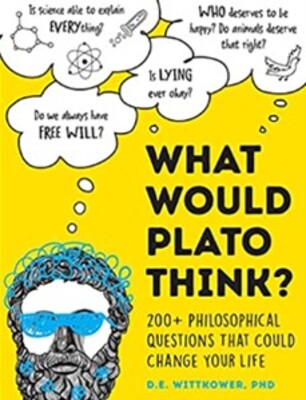
What Would Plato Think?: 200+ Philosophical Questions That Could Change Your Life
2022D.E. Wittkower
Inside What Would Plato Think?, you’ll find the basics of philosophy, written in an easy, digestible way we can all understand, along with questions to help you apply these important theories to your own life. So, after you’ve learned about a philosophical concept, you’ll then be challenged to test yourself and see how the results can impact your daily life.
For instance, after learning about Kant’s theory of morality and the importance of intention you’re challenged with questions like: Can good people do bad things? Was there a time when you intended to do something helpful that ended up being hurtful? Does that make you a good person (because you intended to do good) or a bad person (because the results were bad)?
What Would Plato Think? will not only help you better understand some of the greatest thinkers ever but will also help you think of the world around you in a whole new way! [Amazon.com]
-
A Critical Companion to Sofia Coppola
2022Naaman Wood and Christopher Booth
The films of Sofia Coppola have moved and entranced audiences with her minimalist style, moody soundscapes, and commitment to centering the lives and experiences of women and girls. A Critical Companion to Sofia Coppola explores the implications of her stories, images, and convictions in a comprehensive study of all eight of her major works. Drawing from a wide range of disciplines, each chapter offers a fresh, interdisciplinary reading of one of Coppola’s films and her treatment of core themes like masculinity, sexual politics, bodies, and love. Rigorously researched and unique, the arguments presented within this volume shed new light on one of the most important women filmmakers in film history. [Amazon.com]
A gallery of books by faculty from the Batten College of Arts & Letters, Old Dominion University. Faculty books are also listed under specific departments.
Printing is not supported at the primary Gallery Thumbnail page. Please first navigate to a specific Image before printing.