



-

Carbon and Nutrient Fluxes in Continental Margins: A Global Synthesis
2010Kon-Kee Liu (Editor), Larry Atkinson (Editor), Renato Quiñones (Editor), and Liana Talaue-McManus (Editor)
This book is a product of the joint JGOFS (Joint Global Ocean Flux Study)/LOICZ (Land–Ocean Interactions in the Coastal Zone) Continental Margins Task Team which was established to facilitate continental margins research in the two projects. It contains significant information on the physical, biogeochemical, and ecosystems of continental margins nationally and regionally and provides a very valuable synthesis of this information and the physical, biogeochemical and ecosystem processes which occur on continental margins. The publication of this book is timely as it provides a very strong foundation for the development of the joint IMBER (Integrated Marine Biogeochemistry and Ecosystems Research)/LOICZ Science Plan and Implementation Strategy for biogeochemical and ecosystems research in the continental margins and the impacts of global change on these systems. This initiative will move forward integrated biogeochemical and ecosystems research in the continental margins. We thank all the contributors to this volume and especially Kon-Kee Liu who has dedicated a great deal of time to ensuring a high-quality book is published. IMBER Scientific Steering Committee Julie Hall LOICZ Scientific Steering Committee Jozef Pacyna v 1 Preface In general, interfaces between the Earth’s larger material reservoirs (i. e. , the land, atmosphere, ocean, and sediments) are important in the control of the biogeo-chemical dynamics and cycling of the major bio-essential elements, including carbon (C), nitrogen (N), phosphorus (P), sulfur (S), and silicon (Si), found in organic matter and the inorganic skeletons, shells, and tests of benthic and marine organisms.
-
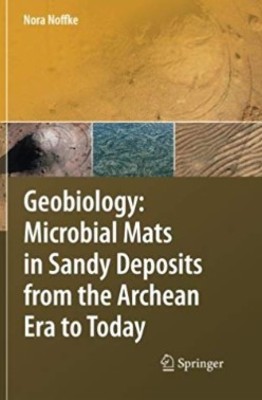
Geobiology: Microbial Mats in Sandy Deposits from the Archean Era to Today
2010Nora Noffke
A murmur is heard from the depths of time. Life and Earth are engaged in a dialog that has lasted for four billion years. Sometimes it’s a whisper, sometimes a roar. One part sometimes gets the upper hand, dominates the discussion and sets the agenda. But mostly the two have some kind of mutual understanding, and the murmur goes on. Most of us don’t listen. Nora does. She listens, and she tries to understand. Nora Noffke has focused her scientific career on the interaction between the living and the non-living. This is no mean task in an academic world where you are usually either this or that, such as either a biologist or a geologist. The amount of stuff you need to grasp is so large that it usually feels better to sit comfortably on one chair, rather than to risk falling between them. Geobiology is not for the faint of heart. Nora’s focus is on that all-important biological substance mucus, or EPS (ext- cellular polymeric substance). EPS is the oil in the machinery, the freeway to travel for many small animals and protists, the coat of armour for others, the mortar in the brick wall for yet others. For microbes such as cyanobacteria it may be the world they built, the world they live, eat, fight, multiply, and die in. [From Amazon.com]
-
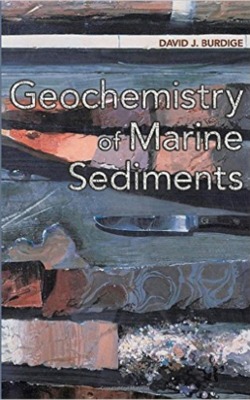
Geochemistry of Marine Sediments
2006David J. Burdige
The processes occurring in surface marine sediments have a profound effect on the local and global cycling of many elements. This graduate text presents the fundamentals of marine sediment geochemistry by examining the complex chemical, biological, and physical processes that contribute to the conversion of these sediments to rock, a process known as early diagenesis. Research over the past three decades has uncovered the fact that the oxidation of organic matter deposited in sediment acts as a causative agent for many early diagenetic changes. Summarizing and discussing these findings and providing a much-needed update to Robert Berner's Early Diagenesis: A Theoretical Approach, David J. Burdige describes the ways to quantify geochemical processes in marine sediment. By doing so, he offers a deeper understanding of the cycling of elements such as carbon, nitrogen, and phosphorus, along with important metals such as iron and manganese. (from Amazon.com)
-

Air-Sea Interaction: Laws and Mechanisms
2001G. T. Csanady and Mary Gibson (Illustrator)
Air-Sea Interaction: Laws and Mechanisms, first published in 2001, provides a comprehensive account of how the atmosphere and the ocean interact to control the global climate, what physical laws govern this interaction, and its prominent mechanisms. In the early twenty-first century air-sea interaction emerged as a subject in its own right, encompassing small-scale and large-scale processes in both air and sea. By developing its subject from basic physical (thermodynamic) principles, the book is broadly accessible to a wide audience. It is mainly directed towards graduate students and research scientists in meteorology, oceanography, and environmental engineering. The book will be of value on entry level courses in meteorology and oceanography, and to the broader physics community interested in the treatment of transfer laws, and thermodynamics of the atmosphere and ocean. [From the publisher]
A gallery of books by faculty in the Department of Ocean and Earth Sciences, College of Sciences, Old Dominion University.
Printing is not supported at the primary Gallery Thumbnail page. Please first navigate to a specific Image before printing.