-
International Causes of Hunger and Malnutrition: Food Insecurity and the Global Economy
2025Francis Adams
This book examines the international causes of hunger and malnutrition and reveals how critical elements of the global economy heighten food insecurity in the developing world.
At present, over two billion people in the developing world do not have secure access to safe, sufficient, and nutritious food. With the global population projected to rise to almost 10 billion by 2050, ensuring universal access to food will become increasingly urgent. The global community will need to redouble its efforts to effectively address the underlying causes of food insecurity. Within countries, a number of causes – poverty, poor governance, civil conflict, environmental decline - are immediately apparent and must be addressed to have any hope of lessening hunger and malnutrition. At the same time, a number of other factors well beyond national borders often constitute equal or greater obstacles to meeting the nutritional needs of all people. These factors are not nearly as visible and are largely outside the control of individual countries and local communities. This book examines how core elements of the global economy cause, prolong, and intensify food insecurity in the developing world. Emphasis is placed on agricultural trade, seed privatization, transnational land acquisitions, industrial fishing, and climate change. Understanding how these five factors impact the poorest communities in the poorest countries is essential for constructing an equitable, inclusive, and sustainable global food system that meets the nutritional needs of all people. By highlighting five major international causes of hunger and malnutrition, this book offers an alternate framework for understanding and combatting global food insecurity.
This book will be of particular interest to students, scholars, and practitioners in the fields of global food security, international development, and global political economy. [From the publisher]
-
Dream and legacy, Volume II: Revisiting King in the Post-Civil Rights Era
2024Michael L. Clemens (Editor), Donathan L. Brown (Editor), and William H. L. Dorsey (Editor)
Beginning early in his career, Dr. Martin Luther King Jr. recognized the moral and humanitarian need to pursue social justice and equity for marginalized Americans, those for whom the American dream had proven to be an elusive ideal. In Dream and Legacy, Volume II: Revisiting King in the Post–Civil Rights Era, contributors sift through the historical record, engaging one of America’s most consequential, radical historical traditions.
Despite robust reform efforts since the 1930s, a wide range of policy-related challenges plague the lives of African Americans, other persons of color, women, and the poor in the twenty-first century. This anthology, like the first from coeditors Michael L. Clemons, Donathan L. Brown, and William H. L. Dorsey, applies the ideology and activism of Dr. King to its analysis of contemporary sociopolitical issues in the United States and abroad. The project begins with a foreword that situates the subsequent essays within the context of contemporary social developments. Grouped into themed sections, the essays cover such topics as voting rights, public protest, police brutality, poverty and wage discrimination, healthcare, and more. The epilogue concludes with a discussion of the timeless impact of Dr. King’s philosophy and activism, as well as the implications of his work for the future of domestic and global leadership. Dream and Legacy, Volume II identifies a variety of practical lessons that can help resolve contemporary social problems. [Amazon.com]
-
Alliances and Partnerships in a Complex and Challenging Security Environment
2024Regina Karp (Editor) and Richard Maass (Editor)
This publication is a product of the Conference "Alliances and Partnerships in a Complex and Challenging Security Environment," organized by NATO Allied Command Transformation (ACT) and Old Dominion University in Norfolk, Virginia. The Conference, held in person on March 11-13, 2024, is part of a long-term cooperation among the two institutions, and it represents the eleventh iteration of ACT's Academic Conference series. The success of the event was due to the joint efforts of the two institutions, and the editors want to acknowledge ACT's Academic Outreach Team, in particular Dr. Vlasta Zekulic, Lieutenant Colonel Virginie Lotti, and Staff Officer Luisa Freutel as well as ODU's Conference Support Team, especially Karen Meier, Christina LiPuma, Dr. Austin Jersild, Ivy Robinson, and Jonas Bensah. Opinions, conclusions, and recommendations expressed or implied within this report are solely those of the contributors and do not necessarily represent the views of ACT or their respective universities or agencies.
--NATO Allied Command Transformation
--Old Dominion University
-
Ontological Security-Seeking: National Identities under Stress
2024Reginia Karp
This book addresses a central puzzle in ontological security theory, namely the relationship between identity continuity and change, and the role anxiety plays in fostering and inhibiting change.
The work argues for a more nuanced perspective on how change and threats to national identity relate, thus advancing our understanding of the role anxiety plays in shaping state choices. The case studies of Sweden and Germany show that national identity can experience highly disruptive challenges when the external security environment changes. According to extant ontological security theory, these structural challenges should lead to heightened anxiety and identity crises as national narratives become unstable and fragile. Instead, empirical evidence shows that states turn ontological anxiety into strategies of anxiety abatement, management, and ontological innovation. The evidence also reveals that states go to extraordinary lengths to maintain existing narratives, discursively maneuvring between the twin needs of biographical continuity and responsiveness to change. In their efforts to adapt and preserve identity, states embrace ontological ambiguity; they neither fully respond to change, nor do they ignore it. Rather, they strive for discursive innovation where new interpretations of how to be are balanced with new interpretations of the meaning of necessary change. In the process, ontological ambiguity becomes the new normal. These findings suggest that Sweden and Germany may not be outliers, and that being and becoming is an inherent feature of social life all state actors must engage with.
This book will be of interest to students of security studies, European politics, foreign policy, and international relations. [From the publisher]
-
The United States and International Law: Paradoxes of Support Across Contemporary Issues
2022Lucretia Garcia Iommi (Editor) and Richard Maass (Editor)
The United States spearheaded the creation of many international organizations and treaties after World War II and maintains a strong record of compliance across several issue areas, yet it also refuses to ratify major international conventions like the UN Convention on the Law of the Sea and the Convention on the Elimination of All Forms of Discrimination Against Women. Why does the United States often seem to support international law in one way while neglecting or even violating it in another?
The United States and International Law: Paradoxes of Support across Contemporary Issues analyzes the seemingly inconsistent U.S. relationship with international law by identifying five types of state support for international law: leadership, consent, internalization, compliance, and enforcement. Each follows different logics and entails unique costs and incentives. Accordingly, the fact that a state engages in one form of support does not presuppose that it will do so across the board. The contributors to this volume examine how and why the United States has engaged in each form of support across twelve issue areas that are central to twentieth- and twenty-first-century U.S. foreign policy: conquest, world courts, war, nuclear proliferation, trade, human rights, war crimes, torture, targeted killing, maritime law, the environment, and cybersecurity. In addition to offering rich substantive discussions of U.S. foreign policy in each of these areas, their findings reveal patterns across the U.S. relationship with international law that shed light on behavior that often seems paradoxical at best, hypocritical at worst. The results help us understand why the United States engages with international law as it does, the legacies of the Trump administration, and what we should expect from the United States under the Biden administration and beyond. [From Amazon.com]
-
The Resistible Corrosion of Europe’s Center-Left After 2008
2022George Menz
This book examines and explains the Center-Left’s political decline since 2008, whilst analyzing the factors that account for its sagging electoral and popular support, losing voters both to the Far-Left, the Far-Right, and abstentions.
Focusing on the era since the 2008 financial crisis in particular, while also charting the historical genealogy that led to the current impasse, the book examines how, when and why the collapse of Europe’s Center-Left occurred. Moving beyond existing and slightly dated accounts, the contributors explore why Social Democrats lack compelling answers to pressing current policy challenges. Faced with a decline in its core clientele, namely blue-collar workers, the Center-Left is being outflanked and risks permanently jeopardizing its erstwhile status as representing a catch-all party. Exploring one of the more pressing and timely political puzzles of the contemporary political scene in Europe, the book identifies six factors that have driven the decline of the Left and examines them systematically across eight countries: France, the United Kingdom, Germany, Sweden, Italy, Austria, the Netherlands, and Denmark.
This book will be of particular interest to both scholars and students of social democracy, political parties, and the politics of the Left and more broadly to those interested in European and comparative politics, governance, and contemporary history. [From the publisher]
-
Political Choice in a Polarized America: How Elite Polarization Shapes Mass Behavior
2022Joshua N. Zingher
What motivates citizens to support one party over the other? Do they carefully weigh all of the relevant issues and assess which party or candidate best matches their own positions? Or do people look at politics as something more akin to a team sport--the specifics do not matter as long as you know what side your team is on? Answering these questions requires us to think about how much the average American knows about politics. Many scholars of public opinion believe that the majority of Americans only pay passing attention to politics. Thus the electorate's apparent lack of political competence presents a direct challenge to normative theories of democracy. How are citizens supposed to exert control over the government if they have no idea what is going on?
In Political Choice in a Polarized America, Joshua N. Zingher argues that these fears are overblown. Not only do individuals have core beliefs about what the government should or should not do, but individuals have become more likely to support the party that best matches their policy attitudes by both identifying as a member of that party and voting for that party in elections. However, as Zingher demonstrates, voters' ability to match their attitudes to a party or candidate varies according to signals sent by elites and increases as parties become more polarized. This is true even among citizens with less political knowledge and efficacy. Voters now consistently cast ballots for the candidates who best match their own policy orientations and are increasingly likely to express hostility towards members of the other party due to growing elite polarization. Moreover, policy preferences tend to remain stable over time and both shape and are shaped by partisanship. [Amazon.com]
-
America in the World from Truman to Biden: Play it Again, Sam
2021Siman Serfaty (Author)
Does America still count in the world? Can the world still count on America? In raising such questions halfway into a series of systemic shocks that began in September 2001, Simon Serfaty, a long-time scholar of international politics, reminds Americans that their country’s well-being and that of the world are intertwined. Play it again, Sam: History is in a foul mood again, and this is no time to come home and leave behind an unfinished European Union facing the ghosts of a revanchist Russia still claiming the Old World as its own; a strategic dark hole in the Greater Middle East, on the eve of a global Sarajevo moment; and China’s surging hegemonic power in a continent fraught with too much history and too little geography.
/="/"> Admittedly, what is good for America may no longer be best for all the West, and what is good for the West may no longer be good for much of the Rest: the unipolar moment is irreversibly over. Yet, writing in an elegant style and with much historical insight, Serfaty argues that even with the old power map irreversibly gone, mainly to the benefit of the non-Western world, a new world order for the twenty-first century will remain dependent on the U.S. role, its capabilities and its efficacy, as well as its leadership and its purpose. [Amazon.com]
-

The Right to Food: The Global Campaign to End Hunger and Malnutrition
2020Francis Adams
This book examines the global campaign to end hunger and malnutrition. Focus is placed on the work of the United Nations which has led international efforts to improve food security in the world’s poorest countries. The book first reviews the long-term project to establish access to safe, sufficient, and nutritious food as a universally recognized human right. This is followed by separate chapters that examine the nature and central causes of food insecurity in Latin America, Africa, the Middle East, and Asia. These chapters also review the contemporary work of three United Nations agencies – the World Food Programme, Food and Agriculture Organization, and International Fund for Agricultural Development – in providing both food aid and food assistance to each region of the developing world. This includes the provision of emergency food aid in response to natural disaster and civil conflict, as well as longer-term food assistance to promote agricultural productivity, advance rural development, and preserve natural environments. The concluding chapter considers ways to strengthen food aid and assistance in the years to come, with many of the recommendations advanced reflecting lessons learned from the actual experience of food aid and assistance described in this book. [Amazon.com]
-
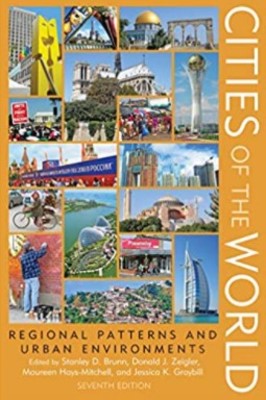
Cities of the World: Regional Patterns and Urban Environments
2020Stanley D. Brunn (Editor), Donald J. Zeigler (Editor), Maureen Hays-Mitchell (Editor), and Jessica K. Graybill (Editor)
Remarkably, more than half of the world's population now lives in cities, and the numbers grow daily as people abandon rural areas. This fully updated and revised seventh edition of the classic text offers readers a comprehensive set of tools for understanding the urban landscape, and, by extension, the world's politics, cultures, and economies.
Providing a sweeping overview of world urban geography, noted experts explore the eleven major global regions. Each regional chapter considers urban history, economy, culture, and environment, as well as urban spatial models and problems and prospects. Each begins with two facing pages: a regional map that shows the major cities and a table of basic statistical information about cities and urbanization in each region and a list of ten salient points about that region’s urban experience. Chapters conclude with a list of references, including films and webpages, which can be used by the student and instructor for additional information about specific cities. … [Amazon.com]
-
The Picky Eagle: How Democracy and Xenophobia Limited U.S. Territorial Expansion
2020Richard Maass
The Picky Eagle explains why the United States stopped annexing territory by focusing on annexation's domestic consequences, both political and normative. It describes how the U.S. rejection of further annexations, despite its rising power, set the stage for twentieth-century efforts to outlaw conquest. In contrast to conventional accounts of a nineteenth-century shift from territorial expansion to commercial expansion, Richard W. Maass argues that U.S. ambitions were selective from the start.
By presenting twenty-three case studies, Maass examines the decision-making of U.S. leaders facing opportunities to pursue annexation between 1775 and 1898. U.S. presidents, secretaries, and congressmen consistently worried about how absorbing new territories would affect their domestic political influence and their goals for their country. These leaders were particularly sensitive to annexation's domestic costs where xenophobia interacted with their commitment to democracy: rather than grant political representation to a large alien population or subject it to a long-term imperial regime, they regularly avoided both of these perceived bad options by rejecting annexation. As a result, U.S. leaders often declined even profitable opportunities for territorial expansion, and they renounced the practice entirely once no desirable targets remained. [Amazon.com]
-
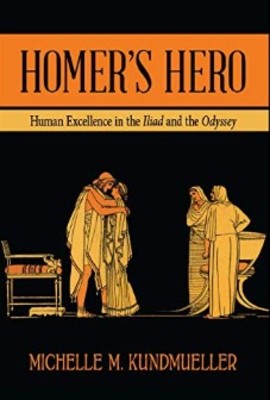
Homer's Hero: Human Excellence in the Iliad and the Odyssey
2019Michelle M. Kundmueller
Draws on Plato to argue that Homer elevated private life as the locus of true friendship and the catalyst of the highest human excellence.
Offering a new, Plato-inspired reading of the Iliad and the Odyssey, this book traces the divergent consequences of love of honor and love of one’s own private life for human excellence, justice, and politics. Analyzing Homer’s intricate character portraits, Michelle M. Kundmeuller concludes that the poet shows that the excellence or virtue to which humans incline depends on what they love most. Ajax’s character demonstrates that human beings who seek honor strive, perhaps above all, to display their courage in battle, while Agamemnon’s shows that the love of honor ultimately undermines the potential for moderation, destabilizing political order. In contrast to these portraits, the excellence that Homer links to the love of one’s own, such as by Odysseus and his wife, Penelope, fosters moderation and employs speech to resolve conflict. It is Odysseus, rather than Achilles, who is the pinnacle of heroic excellence. Homer’s portrait of humanity reveals the value of love of one’s own as the better, albeit still incomplete, precursor to a just political order. Kundmueller brings her reading of Homer to bear on contemporary tensions between private life and the pursuit of public honor, arguing that individual desires continue to shape human excellence and our prospects for justice. [From the publisher]
-
Challenged Hegemony: The United States, China, and Russia in the Persian Gulf
2018Steve A. Yetiv and Katerina Oskarsson
Few issues in international affairs and energy security animate thinkers more than the classic topic of hegemony, and the case of the Persian Gulf presents particularly fertile ground for considering this concept. Since the 1970s, the region has undergone tumultuous changes, with dramatic shifts in the diplomatic, military, and economic roles of the United States, China, and Russia. In this book, Steve A. Yetiv and Katerina Oskarsson offer a panoramic study of hegemony and foreign powers in the Persian Gulf, offering the most comprehensive, data-driven portrait to date of their evolving relations. The authors argue that the United States has become hegemonic in the Persian Gulf, ultimately protecting oil security for the entire global economy. Through an analysis of official and unofficial diplomatic relations, trade statistics, military records, and more, they provide a detailed account of how U.S. hegemony and oil security have grown in tandem, as, simultaneously, China and Russia have increased their political and economic presence. The book sheds light on hegemony's complexities, and challenges and reveals how local variations in power will continue to shape the Persian Gulf in the future. [From Amazon.com]
-
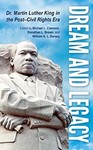
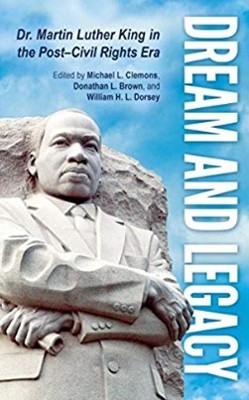
Dream and Legacy: Dr. Martin Luther King in the Post-Civil Rights Era
2017Michael L. Clemons (Editor), Donathan L. Brown, and William H. L. Dorsey
This book examines how Martin Luther King's life and work had a profound, if unpredictable, impact on the course of the United States since the civil rights era. A global icon of freedom, justice, and equality, King is recognized worldwide as a beacon in the struggles of peoples seeking to eradicate oppression, entrenched poverty, social deprivation, as well as political and economic disfranchisement. While Dr. King's work and ideas have gained broad traction, some powerful people misappropriate the symbol of King, skewing his legacy… [From Amazon.com]
-
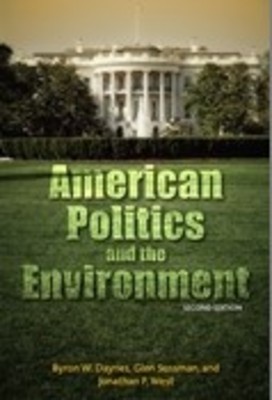
American Politics and the Environment
2016Byron W. Daynes (Editor), Glen Sussman (Editor), and Jonathan P. West (Editor)
Changing our environmental policy has been at the forefront of many political discussions. But how can we make this change come about? In American Politics and the Environment, Second Edition, Byron W. Daynes, Glen Sussman and Jonathan P. West argue it is critical that we must understand the politics of environmental decision making and how political actors operate within political institutions. Blending behavioral and institutional approaches, each chapter combines discussion of an institution along with sidebars focusing on a particular environmental topic as well as a personal profile of a key decision maker. A central focus of this second edition is the emergence of global climate change as a key issue. Although the scientific community can provide research findings to policy makers, politics can create conflicts, tensions, and delays in the crafting of effective and necessary environmental policy responses. Daynes, Sussman, and West help us understand the role of politics in the policy making process and why institutional players such as the president, Congress, and interest groups succeed or fail in responding to important environmental challenges. [From the publisher]
-
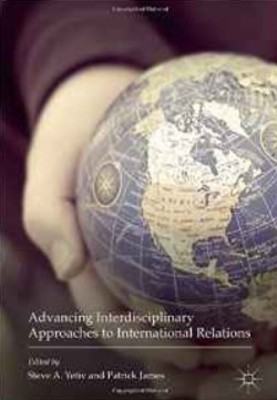
Advancing Interdisciplinary Approaches to International Relations
2016Steve A. Yetiv (Editor) and Patrick James (Editor)
This edited volume breaks new ground by innovatively drawing on multiple disciplines to enhance our understanding of international relations and conflict. The expansion of knowledge across disciplines and the increasingly blurred boundaries in the real world both enable and demand thinking across intellectual borders. While multidisciplinary and interdisciplinary are prominent buzz words, remarkably few books advance them. Yet doing so can sharpen and expand our perspective on academic and real world issues and problems. This book offers the most comprehensive treatment to date and is an invaluable resource for students, scholars and practitioners. [From Amazon.com]
-

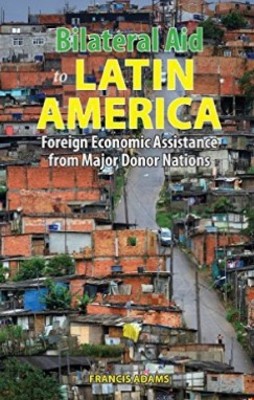
Bilateral Aid to Latin America: Foreign Economic Assistance from Major Donor Nations
2015Francis Adams
This book offers a comprehensive, detailed account of the bilateral economic assistance of six major donor nations-the United States, Canada, the United Kingdom, Spain, Japan, and China-to the nations of Latin America. Focus is placed on assistance that is structured to meet basic human needs, enhance social equity, promote economic growth, preserve natural environments, and support political reform... [From Amazon.com]
-
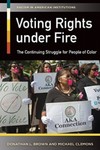
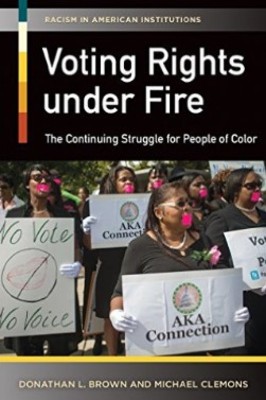
Voting Rights Under Fire: The Continuing Struggle for People of Color
2015Donathan L. Brown and Michael L. Clemens
With the increasing demands for changes in how we vote, the authors analyze the complications of race tied to these proposed policies through historical and contemporary challenges.
-
Massively Parallel Globalization: Explorations in Self-Organization and World Politics
2015David C. Earnest
In this era of globalization, people organize into fluid, adaptive networks to solve complex problems and provide resources that nation-states cannot. Examples include the Grameen Bank, mHealth, and the Ushahidi open source software project. Why do these networks succeed where nation-states fail? Only recently have social scientists developed tools to understand exactly how these complex networks self-organize, emerge, adapt, and solve collective problems. Three of these tools—agent-based modeling, social network analysis, and evolutionary computing—are converging in a field known as computational social science. In this provocative book, David C. Earnest discusses how computational social science helps us understand “massively parallel globalization.” Using “explorations” of global systems ranging from fisheries to banking, Earnest illustrates the promise of computer models for explaining the surprises, cascades, and complexity that characterize global politics today. These examples of massively parallel globalization contrast sharply with the hierarchical and inflexible governmental bureaucracies that are poorly suited to solve many of today’s transnational and global challenges. [From Amazon.com]
-
A Survivor′s Guide to R: An Introduction for the Uninitiated and the Unnerved
2015Kurt Taylor Gaubatz
Focusing on developing practical R skills rather than teaching pure statistics, Dr. Kurt Taylor Gaubatz’s A Survivor’s Guide to R provides a gentle yet thorough introduction to R. The book is structured around critical R tasks, and focuses on applied knowledge, rather than abstract concepts. Gaubatz’s easy-to-read approach helps students with little or no background in statistics or programming to develop real-world R skills through straightforward coverage of R objects and functions. Focusing on real-world data, the challenges of dataset construction, and the use of R’s powerful graphing tools, the guide is written in an accessible, sympathetic, even humorous style that ensures students acquire functional R skills they can use in their own projects and carry into their work beyond the classroom. [From Amazon.com]
-
Myths of the Oil Boom: American National Security in a Global Energy Market
2015Steve A. Yetiv
In Myths of the Oil Boom, Steve A. Yetiv, an award-winning expert on the geopolitics of oil, takes stock of our new era of heightened petroleum production and sets out to demolish both the old myths and misconceptions about oil and the new ones that are quickly proliferating. As he explains, increased production in the US will not lead to a major reduction in longer term oil prices, even if it has contributed to their precipitous fall in the short run. America will not intervene less in the Persian Gulf just because it is producing more oil domestically. Saudi Arabia is less willing or able to play global gas pump to the world economy than in the past. Building an electric car industry does not mean that consumers will buy in, but neither is it true that a broad shift toward eco-friendly cars will have very little impact on greenhouse gas emissions. Most importantly, raising the level of domestic production will never solve America's energy and strategic problems, and it may in fact worsen climate change unless it is accompanied by a serious national and global strategy to decrease oil consumption. While Yetiv takes on these and a number of other misconceptions in this panoramic account, this is not just an exercise in myth-busting; it's also a comprehensive overview of the global geopolitics of oil and America's energy future, cross-cutting some of the biggest economic and security issues in world affairs. [From Amazon.com]
-
Balanced Trade: Ending the Unbearable Costs of America's Trade Deficits
2014Jesse T. Richman, Howard B. Richman, and Raymond L. Richman
How should a principled nation which believes in the benefits of mutually beneficial trade respond to the predations of mercantilist trading partners and imbalanced trade? Many argue that the response should be to do little or nothing. Balanced Trade argues that achieving the full benefits of international trade requires an effective response. Although trade deficits provide short-term gains in consumption, these are combined with long-term losses in consumption, innovation, investment, employment and power. Furthermore, market mechanisms do not correct trade imbalances that result from mercantilism, nor do they compensate for the long term shift in production and consumption towards the mercantilist. Balancing trade can make important short run and long run contributions to economic stability and prosperity… [From Amazon.com]
-
US Politics and Climate Change: Science Confronts Policy
2013Glen Sussman and Byron W. Daynes
Why is climate change the subject of such vehement political rhetoric in the United States? What explains the policy deadlock that has existed for nearly two decades―and that has resulted in the failure of US leadership in the international arena? Addressing these questions, Glen Sussman and Byron Daynes trace the evolution of US climate change policy, assess how key players―the scientific community, Congress, the president, the judiciary, interest groups, the states, and the public―have responded to climate change, and explore the prospects for effective policymaking in the future. [From Amazon.com]
-
National Security Through a Cockeyed Lens: How Cognitive Bias Impacts U.S. Foreign Policy
2013Steve A. Yetiv
How do mental errors or cognitive biases undermine good decision making?" This is the question Steve A. Yetiv takes up in his latest foreign policy study, National Security through a Cockeyed Lens.Yetiv draws on four decades of psychological, historical, and political science research on cognitive biases to illuminate some of the key pitfalls in our leaders’ decision-making processes and some of the mental errors we make in perceiving ourselves and the world… [From Amazon.com]
A gallery of books by faculty in the Department of Political Science and Geography, College of Arts & Letters, Old Dominion University.
Printing is not supported at the primary Gallery Thumbnail page. Please first navigate to a specific Image before printing.