











-
The Routledge International Handbook of Online Deviance
2024Roderick Graham (Editor), Stephan G. Humer (Editor), Claire Seungeun Lee (Editor), and Veronika Nagy (Editor)
Covering a wide range of different online platforms, including social media sites and chatrooms, this volume is a comprehensive exploration of the current state of sociological and criminological scholarship focused on online deviance.
Understanding deviance broadly, the handbook acknowledges both an objective normative approach and a subjective, reactivist approach to the topic, putting into sharp relief the distinctions between cybercrime and online deviance on the one hand, and wider concerns of online communities related to online deviance on the other. Divided into five sections, the first section is devoted primarily to scholarship about the theories and methods foundational to exploring online deviance. The second section, “Gender, Sex, and Sexuality”, presents empirical research on expressions of gender, sex, and sexuality in online spaces considered deviant. The third section, “Violence and Aggression,” highlights scholarship on types of violent communications such as hate speech and cyberstalking. The fourth section, “Communities and Culture,” describes empirical research on online communities and networks that can be described as deviant by wider society. Lastly, the fifth section, “Regional Perspectives,” highlights research in which a terrestrial location is impactful to the online phenomena studied.
Providing a window into future scholarship over the next several years and acknowledging the ephemeral nature of research on digital technology, The Routledge International Handbook on Online Deviance is essential reading for students and scholars of Criminology and Sociology focused on deviant online behaviour. It will also appeal to those working in related areas within Internet/Digital Studies, Media/Communication Studies, Psychology, and Cybersecurity. [From the publisher]
-
Youth, Community and the Struggle for Social Justice
2021Tim Goddard and Randy Myers
Activists, policymakers, and scholars in the US have called for policy reform and evidence-based efforts to decrease the number of people in jail and prison, improve hostile police–community relations, and rollback the "tough on crime" movement. Given that poor people, particularly poor people of color, make up the majority of those under carceral control in Western, industrial countries, can technical solutions, gradual reforms, and individual-level programming genuinely change the deeply entrenched carceral state that has been expanding in the US for over 40 years?
In this book, the authors offer an examination of the creative ideas that twelve US-based social justice organizations put forward for how participation in social change might spur not only individual-level change in young people, but community-wide mobilization against the harms resulting from the "tough on crime" movement and neoliberal policy. Using alternative programs grounded in political and social consciousness-raising, these organizations provide important and novel methods for how we might roll back carceral expansion. Their approaches resonate with scholarship in criminology and related fields; however, they sharply contrast with popular notions of "what works". The authors detail how community-based organizations must navigate not only these scientific forces, but the bureaucratic and financial ones consistent with neoliberal governance as well as the more formidable, less navigable political barriers that activate when organizations mobilize young people of color for social and carceral reform. [Amazon.com]
-

White-Collar Crime: A Systems Approach
2021Brian K. Payne
Updated with an exciting new chapter on political crime that highlights the debated connections between crime and politics, the Third Edition of White-Collar Crime provides you with a comprehensive introduction to the most important topics within white-collar crime. Brian K. Payne provides a theoretical framework and context for you to explore white-collar crime as a crime problem, a criminal justice problem, and a social problem. By introducing the topics within a systematic approach, Payne encourages you to examine the many facets of white-collar crime by exposing you to different crimes as well as the various systems for responding to white-collar misconduct. [Amazon.com]
-
Sex-Positive Criminology
2020Aimee Wodda and Vanessa R. Panfil
Sex-Positive Criminology proposes a new way to think about sexuality in the fields of criminology and criminal justice. Sex-positivity is framed as a humanizing approach to sexuality that supports the well-being of self and others. It is rooted in the principle of active and ongoing consent, and it encourages perspectives that value bodily autonomy, the right to access education, and respect for sexual difference. In this book, the authors argue that institutions such as prisons, schools, and healthcare facilities, as well as agents of governments, such as law enforcement, correctional officers, and politicians, can unduly cause harm and perpetuate stigma through the regulation and criminalization of sexuality.
In order to critique institutions that criminalize and regulate sexuality, the authors of Sex-Positive Criminology examine case studies exploring the criminalization of commercial sex and related harm (at the hands of law enforcement) experienced by those who sell sex. They investigate sex education in schools, reproductive justice in communities and institutions, and restrictions on sexuality in places like prisons, jails, juvenile detention, and immigrant detention facilities. They look into the criminalization of BDSM practices and address concerns about young people’s sexuality connected to age of consent and privacy violations. The authors demonstrate how a sex-positive perspective could help criminologists, policymakers, and educators understand not only how to move away from sex-negative frameworks in theory, policy, and practice, but how sex-positive criminological frameworks can be a useful tool to reduce harm and increase personal agency. [Amazon.com]
-
Cybercrime and Digital Deviance
2019Roderick Graham and Shawn K. Smith
Cybercrime and Digital Deviance is a work that combines insights from sociology, criminology, and computer science to explore cybercrimes such as hacking and romance scams, along with forms of cyberdeviance such as pornography addiction, trolling, and flaming. Other issues are explored including cybercrime investigations, organized cybercrime, the use of algorithms in policing, cybervictimization, and the theories used to explain cybercrime. … [Amazon.com]
-
Introduction to Criminal Justice: A Balanced Approach (Second Edition)
2019Brian K. Payne, Willard M. Oliver, and Nancy E. Marion
Introduction to Criminal Justice, Second Edition, provides you with balanced, comprehensive, and up-to-date coverage of all aspects of the criminal justice system. Authors Brian K. Payne, Willard M. Oliver, and Nancy E. Marion cover criminal justice from a student-centered perspective by identifying the key issues confronting today’s criminal justice professionals. You are presented with objective, research-driven material through an accessible and concise writing style that makes the content easier to comprehend. By exploring criminal justice from a broad and balanced perspective, you will understand how decision making is critical to the criminal justice process and your future career.
The fully updated Second Edition has been completely revised to include new studies and current examples that are relatable to today’s students. Two new feature boxes have been added to this edition to help you comprehend and apply the content. "You Have the Right to…" gives insight into several Constitutional amendments and their relationship with criminal justice today; and "Politics and Criminal Justice" explores current political hot topics surrounding the justice system and the debates that occur on both sides of the political aisle. [From Amazon.com]
-
Inside Social Life: Readings in Sociological Psychology and Microsociology
2018Spencer Cahill (Editor), Kent Sandstrom (Editor), and Carissa Froyum (Editor)
Now in its eighth edition, this best-selling reader provides an introduction to the sociological study of social psychology, interpersonal interaction, embodiment, emotion, selfhood, inequality, and the politics of everyday realities. Inside Social Life: Readings in Sociological Psychology and
Microsociology presents thirty-nine selections that include both classic and contemporary theoretical work and empirical studies. Detailed introductions to each part and article identify and explain central issues, key concepts, and relationships among topics. [Amazon.com]
-
Using Focus Groups to Listen, Learn, and Lead in Higher Education
2018Mona J. E. Danner, J. Worth Pickering, and Tisha M. Paredes
Using Focus Groups to Listen, Learn, and Lead in Higher Education presents an easy-to-use 6-step guide to help leaders in higher education listen to and learn from their stakeholders in order to enhance decision making. The big questions facing institutions today, especially those surrounding access, affordability, and accountability, require more than dashboards. Metrics and quantitative data alone do not offer lasting solutions and improvements. Using qualitative methods to listen to the voices of those involved, especially students and staff, is critical. Focus groups constitute the most appropriate, rigorous, and relevant qualitative research tool for this purpose, and one that is cost-effective and builds community when conducted using the ODU Method described in this book. … [From Amazon.com]
-
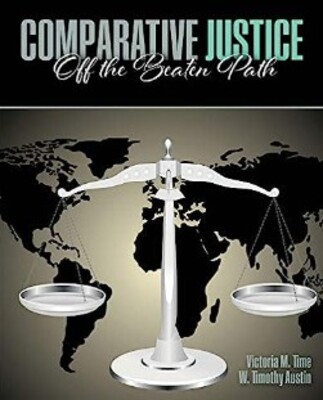
Comparative Justice: Off the Beaten Path
2018Victoria M. Time and Timothy Austin
Comparative Criminal Justice Systems encourages critical thinking by introducing students and policy makers to different ways of organizing the administration of justice in the different parts of the world without ethnocentric assumptions that ‘our’ ways must be superior to all others.
Comparative Justice: Off the Beaten Path offers a simple definition of comparative justice: the study of the similarities and dissimilarities of diverse systems of social order. It introduces readers to interesting case studies of the families of law and offers engaging contributions in comparative justice as well as fresh perspectives on developing countries. [Amazon.com]
-

The Handbook of the History and Philosophy of Criminology
2018Ruth Ann Triplett (Editor)
Featuring contributions by distinguished scholars from ten countries, The Wiley Handbook of the History and Philosophy of Criminology provides students, scholars, and criminologists with a truly a global perspective on the theory and practice of criminology throughout the centuries and around the world. In addition to chapters devoted to the key ideas, thinkers, and moments in the intellectual and philosophical history of criminology, it features in-depth coverage of the organizational structure of criminology as an academic discipline world-wide. ... [From Amazon.com]
-

The Gang's All Queer: The Lives of Gay Gang Members
2017Vanessa R. Panfil
Many people believe that gangs are made up of violent thugs who are in and out of jail, and who are hyper-masculine and heterosexual. In The Gang’s All Queer, Vanessa Panfil introduces us to a different world. Meet gay gang members – sometimes referred to in popular culture as “homo thugs” – whose gay identity complicates criminology’s portrayal and representation of gangs, gang members, and gang life. In vivid detail, Panfil provides an in-depth understanding of how gay gang members construct and negotiate both masculine and gay identities through crime and gang membership… [From Amazon.com]
-
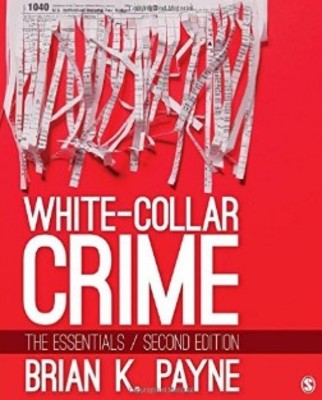
White-Collar Crime: The Essentials
2017Brian K. Payne
The thoroughly updated Second Edition of White Collar Crime: The Essentials continues to be a comprehensive, yet concise, resource addressing the most important topics students need to know about white-collar crime. Author Brian K. Payne provides a theoretical framework and context for students that explores such timely topics as crimes by workers, sales-oriented systems, crimes in the health care system, crimes by criminal justice professionals and politicians, crimes in the educational system, crimes in economic and technological systems, corporate crime, environmental crime, and more. This easy to read teaching tool is a valuable resource for any course that covers white-collar crime. [From Amazon.com]
-
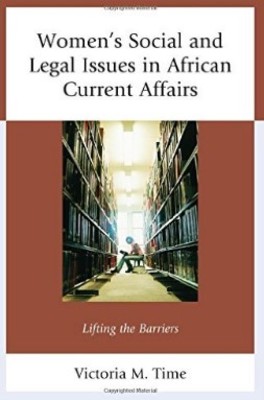
Women's Social and Legal Issues in African Current Affairs: Lifting the Barriers
2017Victoria M. Time
This volume explores the difficulties that beset African women and inhibit them from excelling in many walks of life in the twenty-first century. Asymmetrical relations in society position women in subjugated and marginalized roles. This is caused by customary practices that have left women in vulnerable and subsidiary positions, as well as statutory provisions that fester this process.
Despite its richness in raw materials and minerals, Africa remains slow to grow when compared to other continents. The economies of most African countries is severely anemic: corruption is rife, poor governance is systemic, and wars, conflicts, famine and diseases abound. Stalled economies disproportionately affects women; for example, as nurturers, women have the extra responsibility of taking care of children and members of the extended family. In times of want, women are more likely to give up the little they have so that their children and others may survive. This book shows the various social and legal obstacles that stall women’s upward mobility and offers recommendations on how these issues can be resolved. [From Amazon.com]
-
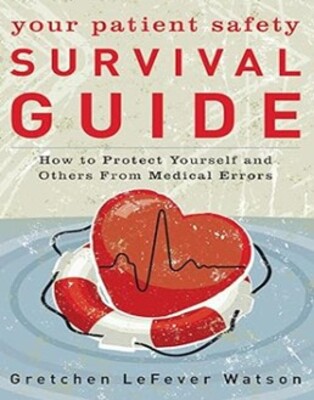
Your Patient Safety Survival Guide: How to Protect Yourself and Others from Medical Errors
2017Gretchen LeFeve Watson
Each year, one out of every four hospital patients in the United States will be harmed by the care they receive. Over 400,000 will die as a result. Dr. Gretchen LeFever Watson's definitive guide empowers patients to be patient safety advocates.
It takes a village to combat preventable errors and omissions that cause millions of deaths and sickness in our nation’s hospitals and care facilities. Although most of these deaths are due to human and system errors—not faulty medical decisions or diagnoses—this annual death toll—as well as the millions of additional incidents of survivable patient harm—could be cut in half through consistent use of simple and nearly cost-free safety behaviors.
In Your Patient Safety Survival Guide, Gretchen LeFever Watson delivers a patient-centered blueprint on how to transform the patient-safety movement so that millions of unnecessary illnesses and deaths in hospitals, outpatient facilities, and nursing homes can be avoided. She provides key safety habits that people must learn to recognize so they can be sure hospital personnel use them during every patient encounter. She also explains how addressing the most common safety problems will set the stage for tackling a wide range of issues, including healthcare’s role in the overuse of opiate painkillers and its related heroin epidemic.
Watson’s call for a more sensible societal response to medical and human error in hospitals promotes a timely and full disclosure of all mistakes—an approach that has been proven to accelerate the emotional recovery of everyone affected by patient safety events while also reducing the financial burden on hospitals, providers, and patients. [Amazon.com]
-
Deviance and Social Control: A Sociological Perspective
2016Michelle L. Inderbitzin, Kristin A. Bates, and Randy R. Gainey
This book serves as a guide to students delving into the fascinating world of deviance for the first time. Authors ... offer a clear overview of issues and perspectives in the field, including introductions to classic and current sociological theories as well as research on definitions and causes of deviance and reactions to deviant behavior. The unique text/reader format provides the best of both worlds, offering both substantial original chapters that clearly explain and outline the sociological perspectives on deviance, along with carefully selected articles on deviance and social control taken directly from leading academic journals and books. The Second Edition features updated research, examples of specific forms of deviance, and discussions of policy, as well as a new chapter and readings on global perspectives on deviance and social control. [from Amazon.com]
-
Routledge Revivals: Guards imprisoned (1989): Correctional Officers at Work
2016Lucien X. Lombardo
First published in 1989, Guards Imprisoned provides an in-depth look into the work and working life of prison guards as they perceive and experience it. The author, who was a teacher at Auburn Prison, New York, discovered that little was known about the guard’s perceptions of his "place" in the prison community and set out to explore the dynamics of this key correctional occupation from the perspective of those who do it. The raw data was provided by over 160 hours of interviews with guards and is presented in the order of a "natural history" — from their pre-recruitment images of prison to the search for satisfaction as experienced guards. The book also includes a follow-up with the officers who were originally interviewed in 1976, assessing patterns of change and stability in their attitudes and behaviors... [From Amazon.com]
-
Crimes of the Powerful: An Introduction
2016Dawn L. Rothe and David Kauzlarich
Crimes of the Powerful: An introduction is the first textbook to bring together and show the symbiotic relationships between the related fields of state crime, white-collar crime, corporate crime, financial crime, organized crime, and environmental crime. Dawn L. Rothe and David Kauzlarich introduce the many types of crimes, methodological issues associated with research, theoretical relevance, and issues surrounding regulations and social controls for crimes of the powerful… [From Amazon.com]
-
Perspectives on Deviance and Social Control
2015Michelle Lee Inderbitzin, Kristin Ann Bates, and Randy R. Gainey
Perspectives on Deviance and Social Control by Michelle Inderbitzin, Kristin Bates, and Randy Gainey is a core textbook that provides a sociological examination of deviance and social control in society. Derived from the successful text/reader version, this concise and student-friendly resource uses sociological theories to explain a variety of issues related to deviant behavior and societal reactions to deviance. The authors briefly explain the development of major sociological theoretical perspectives and use current research and examples to show how those theories are used to think about and study the causes of deviant behavior and the reactions to it. [from Amazon.com]
-

Family Violence and Criminal Justice: A Life-Course Approach
2015Brian K. Payne and Randy R. Gainey
The historical context of family violence is explored, as well as the various forms of violence, their prevalence in specific stages of life, and responses to it made by the criminal justice system and other agencies. The linkage among child abuse, partner violence and elder abuse is scrutinized, and the usefulness of the life-course approach is couched in terms of its potential effect on policy implications; research methods that recognize the importance of life stages, trajectories, and transitions; and crime causation theories that can be enhanced by it. [from Amazon.com]
-
Introduction to Criminal Justice: A Balanced Approach
2015Brian K. Payne, Willard M. Oliver, and Nancy E. Marion
Introduction to Criminal Justice: A Balanced Approach provides students with engaging, comprehensive, and up-to-date coverage of all aspects of the criminal justice system. Esteemed authors Brian K. Payne, Willard M. Oliver, and Nancy E. Marion explore criminal justice from a student-centered perspective by presenting research-driven material in an accessible, clear, and succinct writing style. Two unique chapters on Perspectives on Crime and Criminal Justice Research and Crime Typologies provide students with the foundational knowledge that they need to be critical thinkers and active participants within their chosen field. Students are encouraged to imagine themselves in specific criminal justice situations and decide how they would respond to the situation with a balanced and effective solution. By exploring criminal justice from a balanced perspective with an issues-oriented approach, students will understand how decision-making is critical to the criminal justice process. In particular, students will come to appreciate how their own future careers will be shaped by the decisions they make. [From Amazon.com]
-
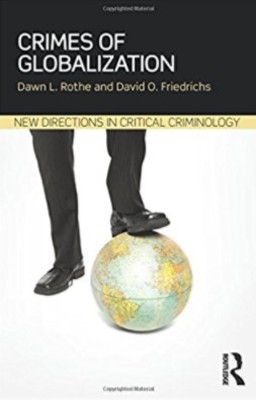
Crimes of Globalization
2015Dawn L. Rothe and David O. Friedrichs
This book addresses immensely consequential crimes in the world today that, to date, have been almost wholly neglected by students of crime and criminal justice: crimes of globalization. This term refers to the hugely harmful consequences of the policies and practices of international financial institutions – principally in the global South. A case is made for characterizing these policies and practices specifically as crime. Although there is now a substantial criminological literature on transnational crimes, crimes of states and state-corporate crimes, crimes of globalization intersect with, but are not synonymous with, these crimes… [From Amazon.com]
-
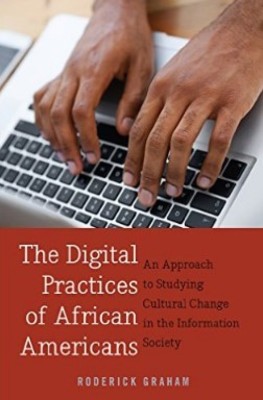
The Digital Practices of African Americans: An Approach to Studying Cultural Change in the Information Society
2014Roderick Graham
How do social scientists study the impact of social networking sites on racial identity formation? How has the Internet impacted the accumulation of social and cultural capital? By synthesizing insights across a variety of disciplines, this book builds an original theoretical perspective through which these and other questions about core social processes can be addressed. Three case studies of how African Americans use information and communication technologies (ICTs) are used to illustrate this theoretical perspective. They show how groups can leverage ICTs to overcome historical inequalities. The book argues that the lenses through which scholars and society’s leaders think about new technology place too much emphasis on the technological and economic aspects of ICTs, and not enough on the impact of ICTs on social processes at the everyday level. [From Amazon.com]
-
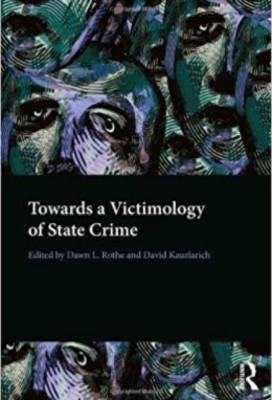
Towards a Victimology of State Crime
2014Dawn L. Rothe (Editor) and David Kauzlarich (Editor)
Millions of people have been victimized by the actions and omissions of states and governments. This collection provides expert analyses of such victimizations across the world, from Europe, the United States, and Africa to New Zealand and South America. Leading scholars in the area of state crime describe the nature, extent, and distribution of state crime victimization, as well as theoretical and practical paths for understanding, explaining, and aiding victims of massive harms by governments… [From Amazon.com]
-
Handbook of LGBT Communities, Crime, and Justice
2013Dana Peterson (Editor) and Vanessa R. Panfil (Editor)
Contemporary scholars have begun to explore non-normative sexual orientation, gender identity, and gender expression in a growing victimization literature, but very little research is focused on LGBTQ communities’ patterns of offending (beyond sex work) and their experiences with police, the courts, and correctional institutions. This Handbook, the first of its kind in Criminology and Criminal Justice, will break new ground by presenting a thorough treatment of all of these under-explored issues in one interdisciplinary volume that features current empirical work. [Amazon.com]
-

The Realities of International Criminal Justice
2013Dawn L. Rothe (Editor), James Meernik (Editor), and Thordis Ingadottir (Editor)
In The Realities of the International Criminal Justice System, Rothe, Meernik, and Ingadottir bring together expert scholars from the disciplines of law, criminology, sociology and political science to critically analyze the current state of and impact of the international criminal justice system. Through a systematic evaluation of the existing courts and their effects in the real world on states, victims, and offenders, and their impact on the development of the law related to their jurisdictions, both on the international and national level, the authors hope that lessons can be drawn for a more promising future delivery of criminal justice by international and domestic judicial bodies. [From Amazon.com]
A gallery of books by faculty in the Department of Sociology and Criminal Justice, College of Arts & Letters, Old Dominion University.
Printing is not supported at the primary Gallery Thumbnail page. Please first navigate to a specific Image before printing.