



























-
Early Childhood Special Education - 0 to 8 Years: Strategies for Positive Outcomes
2009Sharon A. Raver
Featuring the application of evidence-based strategies, ecological and family-based approaches, effective learning, and the use of responsive cultural/linguistic practices, Early Childhood Education (0-8 Years): Strategies for Positive Outcomes, prepares students for all the professional knowledge and skill competencies they need to promote optimal development in infant and toddlers (0-3), preschoolers (3-5), and primary-aged (6-8) children with special needs. Using real-life case studies to illustrate recommended practices, the book clearly presents disability characteristics, assessment practices, and easy-to-implement interventions for inclusive and special education settings, while giving students all the resources they need to master and apply the material… {From Amazon.com]
-
Books About the Middle East: Selecting and Using Them with Children and Adolescents
2008Tami Al-Hazza and Katherine Toth Bucher
Learn all about Middle Eastern culture and how to use that literature in K-12 schools to promote understanding. Chapters provide background information about the countries and peoples of the place, literature related to the region and to the major ethnic groups of the region, guidelines for selecting children's and young adult literature about the region, and strategies for incorporation. This new resource includes an annotated bibliography of children's and young adult books with evaluations, reading/interest level, review sources, awards/prizes, and Accelerated Reader/Reading Counts availability. [From Amazon.com]
-

Field Hockey: Steps to Success
2008Elizabeth Anders and Susan Myers
Enter the game with confidence, knowing you've mastered the essentials. Field Hockey: Steps to Success combines a comprehensive, progressive approach with in-depth instruction, illustrations, and 86 drills. Whether you are new to the sport or seeking new techniques to add to your arsenal, Field Hockey: Steps to Success—part of the popular Steps to Success Series that has sold more than 1.5 million copies—will help you improve every aspect of your game. [From the Publisher]
-
Children of the Self-Absorbed: A Grown-Up's Guide to Getting Over Narcissistic Parents
2008Nina W. Brown
Children of the Self-Absorbed offers clear definitions of narcissism and narcissistic personality disorder to help you identify the extent of your parent's problem. You'll learn the different types of destructive narcissism and how to recognize their effects on relationships. With the aid of proven techniques, you'll discover that you're not helpless against your parent's behavior and that you needn't consider giving up on the relationship. Instead, realistic strategies and steps are suggested for learning to set mutually agreed upon behaviors that can help you fulfill your needs and expectations. [From Amazon.com]
-
Dead-End Lovers: How to Avoid Them and Find True Intimacy
2008Nina W. Brown
Establishing and maintaining a meaningful, satisfying, and enduring intimate relationship can be elusive for many people. Time and again, they are drawn to lovers with whom the relationship is futile, ending with hurt feelings and regrets. In this work, Nina Brown shares her longtime experience as a professional counselor to help those who ask: Why do I keep picking unsuitable lovers? Brown calls them dead-end lovers, and in this work she shows us, not only how to spot them early and avoid them, but also what it is―what psychological needs we have ―that attracts us to them…. [From Amazon.com]
-
Teaching Multicultural Literature to Help Children Understand Ethnic Diversity: Essays and Experiences
2008Gail Singleton Taylor (Editor), KaaVonia Hinton (Editor), and Lisa Moore (Editor)
Addresses the challenges of multicultural teaching by presenting instructional strategies.
-
50 Secrets of the Longest Living People with Diabetes
2007Sheri R. Colberg and Steven V. Edelman
The latest scientific research confirms that you can live well and long with diabetes without suffering from its more devastating health complications. Whether you have type 1 or type 2 diabetes, you have the ability to improve the quality and length of your life through physical activity, a positive mental outlook, and certain diabetes tools and medications. Now, the longest living people with type 1 and type 2 diabetes share the secrets that have helped them achieve longevity and wellness… [From Amazon.com]
-
Quintessence of Classical Japanese Martial Arts: Historical and Philosophical Perspectives
2007Hiroyuki Tesshin Hamada
Describes classical Japanese martial arts and provides historical and philosophical perspectives pertaining to various martial arts including Kendo, Judo and Jiujutsu.
-
Integrating Multicultural Literature in Libraries and Classrooms in Secondary Schools
2007KaaVonia Hinton and Gail K. Dickinson
Reach students across all cultures with multicultural literature! Help all students learn to read, comprehend, and gain information literacy skills through multicultural literature. Use this book to provide hands-on instruction to help students connect, learn, and achieve Adequate Yearly Progress (AYP)! Sample standards-based, integrated lesson plans and curriculum units show teachers how to really integrate multicultural materials in their lessons to help all students achieve. This is an excellent resource for teachers and librarians who teach and motivate English Language Learners (ELL) and students from all cultures. [From Amazon.com]
-
Exercise Prescription: A Case Study Approach to the ACSM Guidelines
2007David P. Swain and Brian C. Leutholtz
You will find no better preparation source for the American College of Sports Medicine (ACSM) certification than the new, second edition of Exercise Prescription: A Case Study Approach to the ACSM Guidelines. Authors David Swain and Brian Leutholtz present a series of case studies to help you translate the ACSM guidelines for exercise prescription into practical knowledge. [From the Publisher]
-
Coping with Infuriating, Mean, Critical People: The Destructive Narcissistic Pattern
2006Nina W. Brown
For all of us forced to deal with an infuriating, mean, critical person, seasoned counselor Nina Brown has a word of warning. You must accept that your usual coping strategies are not effective, and will not be effective, with this person, she advises. You cannot expect them to react and behave as adults. So what's a victim to do? Start with the suggestions in this book.
In Coping with Infuriating, Mean, Critical People, Brown explains why many people, who may not display all of the characteristics necessary for a formal, full-blown narcissist diagnosis, still display what she calls a destructive narcissistic pattern that results in much the same anguish for those with whom the individual interacts. Thankfully, she also provides specific methods that will help victims of this behavior deal with the narcissistic colleague, supervisor or boss, parent, or intimate other. [From Amazon.com]
-
Angela Johnson: Poetic Prose
2006KaaVonia Hinton
Angela Johnson's career as an award-winning young adult novelist almost did not happen. Like so many would-be writers, she had decided to pursue a more financially stable career: teaching. But in the end, Johnson abandoned the familiar and seemingly more secure and became an author. Her first picture book, Tell Me a Story, Mama, conveyed Johnson's talent as a writer and left readers hoping that more books were forthcoming. And come they did. Her picture books were concise, poetic, and memorable. But some wondered, could she write compelling YA literature? Her first book for adolescents, Toning the Sweep, proved that indeed she could. Sparse, poetic language similar to that found in her picture books made its way into her YA novels, and it caused quite a stir amongst critics. [From Amazon.com]
-
Skills and Tools for Today's Counselors and Psychotherapists: From Natural Helping to Professional Counseling
2006Edward S. Neukrug and Alan M. Schwitzer
Learn essential skills; understand the nature of helping; learn about change strategies, diagnosis, and treatment planning; explore ethical, professional, and cross-cultural issues; and apply your new skills to the helping relationship ... After reading about the fundamental skills and techniques of counseling in the text, you can access complementary role plays, skill demonstrations, and process stages ... to see the same essential principles in action. [From the back cover]
-
At-Risk Population: Sociolinguistic and Educational Issues
2006Smita Sinha and Abha Gupta
Populations world over which are at risk have no voices of their own and they share a similar fate irrespective of the caste creed or national boundaries. The effort of this book is to bring such people and their plight into focus with the help of a variety of contributors. The purpose of the edited book At Risk Population Sociolinguistic and Educational Issues is two fold first to build educators knowledge of the wide range of issues characterizing the at risk and disadvantaged population in various parts of the world second to bring awareness of the existing social structures amongst different nations from a socio-constructive viewpoint.
-
The 7 Step Diabetes Fitness Plan: Living Well and Being Fit with Diabetes, No Matter Your Weight
2005Sheri R. Colberg
Most of the 18.2 million Americans currently living with diabetes have been advised by their doctors, or other health-care providers, that weight loss is essential for them to control their condition and stay healthy. However, the vast majority of people fail miserably at dieting, ultimately regaining the pounds they manage to lose. The latest research confirms, though, that diabetic people do not have to lose significant amounts of body fat to be healthy. The 7 Step Diabetes Fitness Plan guides people step-by-step to achieve a healthy body despite having excess body fat and diabetes or pre-diabetes -- primarily by becoming physically fit. With practical information and tips on physical fitness, blood sugar balance with physical activity, nutrition, nutritional supplements, emotional fitness, diabetic medications, motivation, and more, The 7 Step Diabetes Fitness Plan gives readers the knowledge they need to prevent, reverse, and control their diabetes through fitness -- and to live a long, healthy life without the need for dieting and weight loss -- making this the essential diabetes fitness resource. [Amazon.com]
-
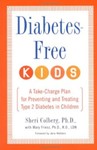
Diabetes-Free Kids: A Take-Charge Plan for Preventing and Treating Type-2 Diabetes in Children
2005Sheri R. Colberg and Mary Friesz
Diabetes-Free Kids is the first book to address the burgeoning epidemic of type 2 diabetes among children and to provide parents with an action plan for halting it. Exercise physiologist Sheri Colberg and nutritionist Mary Friesz lay out a clear plan for diet and exercise that will get even the pickiest eaters to enjoy healthier yet satisfying meals and snacks, and will motivate the most sedentary children to start moving. [Amazon.com]
-
Empowerment of Women: Language and Other Facets
2005Abha Gupta and Smita Sinha
This book is a pioneering attempt to provide a comprehensive compilation of articles by eminent scholars on the issue of women's empowerment in Asia. Segmented into five parts - Language, Media and Empowerment; Socio-political-culture Empowerment; Economic, Profession and legal Empowerment; Domestic Empowerment and Empowerment and Education - the sole objective of this book is to present various dimensions and facets of empowerment along with role of language, education, Media, literature, science and technology, and women's health.
-
Contemporary School Counseling: Theory, Research, and Practice
2005Christopher A. Sink (Editor)
This text reviews the principle roles and functions of a contemporary school counselor, including counseling, coordination, collaboration, and guidance--as defined by the American School Counselor Association. Editor Christopher A. Sink introduces the subject in the first chapter, and each subsequent chapter is written by a specialist in the field. [From Amazon.com]
-
Coping With Your Partner's Jealousy
2004Nina W. Brown
Statisticians report that as many as two of every three married couples have at least one incident of spousal battery in their history; the number one motivation for these attacks is the jealousy of one partner. Whether motivated by a desire for power, attention, control, or affection, feelings of jealousy often lead to moments of emotional or physical violence that can cripple and destroy a relationship.
In this, the first book ever written specifically to partners of jealous people, a professional counselor offers a series of assessments designed to help you reflect on personality traits that contribute to jealousy, both in yourself and in your partner. The book contains exercises and strategies that will help those involved in repairable relationships identify the triggers that provoke jealous reactions in their partners. Techniques for effective boundary-setting, enhanced communication, and deepened intimacy give you the tools you need to work through periods of jealous reaction. [From Amazon.com]
-
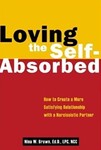
Loving the Self-Absorbed: How to Create a More Satisfying Relationship with a Narcissistic Partner
2003Nina W. Brown
A narcissistic partner is forever putting his or her own needs first and is also demeaning, manipulative, controlling, and competitive. After the early stages of a relationship, the non-narcissist is usually left questioning her value. In this first book for the intimate partners of narcissists, find empowering strategies you can use to limit the destructive effect of your partner's behavior and get what you need out of your relationship.
Learn the five types of destructive narcissism and how to recognize their effects on your relationship. The book reassures you that you are not helpless, and that you needn't give up on your relationship. Instead, the book offers realistic tips on living so that both of your needs are met. Change your "fantasy" wishes into realistic expectations, create boundaries, listen and respond in a self-caring manner, and learn when to avoid and ignore especially bad behavior. The book teaches you how to stop feeding into a narcissist's self-focus with subtle behavior cues such as acting distracted when he or she vies for attention. Ultimately, you will achieve a degree of understanding and separation that will help you see both your partner and yourself in a new light. [Amazon.com]
-
Best Practices, Best Thinking, and Emerging Issues in School Leadership
2003William A. Owings (Editor) and Leslie S. Kaplan (Editor)
Features the leading figures in educational leadership, this resource presents research and key considerations to assist in making decisions about new programs and directions for your school.
-
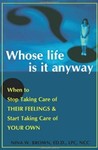
Whose Life is it Anyway? When to Stop Taking Care of Their Feelings & Start Taking Care of Your Own
2002Nina W. Brown
Psychologist and author Nina Brown helps readers who are over-involved with loved ones shield themselves against their emotional needs and start to focus on their own. Does your mother's desire to complain about how thoughtless your father was last night override your need to get to work on time? Do you really have nothing better to do on Saturday night than to ferry your little brother home from the movies, or help your sister debug her relationship with her boyfriend? If you tend to drop everything in your own life whenever a family member needs you, then you join the ranks of the millions others who are over-involved with their families. Over-involved family members get so swallowed by their loved ones' problems that they often lose sight of who they are and what they really want. This kind of excessive empathy becomes a problem when the needs of others determine every move you make and inhibit your ability to take care of yourself and get on with your own life. In Whose Life Is It Anyway? psychologist and author Nina Brown starts by helping readers evaluate their own family ties and decide if they are too caught up in other's needs. She goes on to provide a variety of techniques to help readers shield themselves from the needs of others, build strong boundaries, strengthen parts of their personalities against a tendency toward excessive empathy, and stay free of dominating or manipulative relationships. [From Amazon.com]
-
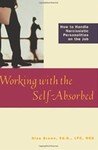
Working with the Self-Absorbed: How to Handle Narcissistic Personalities on the Job
2002Nina W. Brown
Learn to manage the destructive behaviors of narcissists in the workplace and to ensure that your work gets the credit it deserves. Find realistic strategies for ignoring outrageous narcissism. Establish a separate-but-equal working environment with your narcissistic coworker and gain the validation that you need to feel good about the work you do. [From Amazon.com]
-

The Unfolding Life: Counseling Across the Lifespan
2002Radha J. Horton-Parker and Nina W. Brown
Horton-Parker and Brown seek to prepare counselors-in-training to better understand personal growth and self-development. Their approach is designed to guide readers to better self-understanding through reviews of prevailing theory and through a series of exercises. Each chapter presents one or more exercises designed to allow the reader an opportunity to explore his/her personal development and to become aware of any unfinished and/or unresolved business that could emerge as counter transference with clients.
The basic theories of psychological growth and development―moral, cognitive, and gender identity―are examined under the stages of development throughout the life span. The specialized theories for the different stages, such as childhood and adolescence, are presented along with counseling applications for that specific stage. Readers are provided with numerous examples of how to use this information to better help clients. Other unique features include material on becoming a culturally sensitive counselor and an explanation of object-relations and self-psychology theories. Of particular interest to researchers and students involved with counseling issues. [From Amazon.com]
-
Teacher Quality, Teaching Quality, and School Improvement
2002Leslie S. Kaplan and William A. Owings
A guide for school administrators in identifying, hiring and supporting high quality teachers.
A gallery of books by faculty from the Darden College of Education, Old Dominion University. Faculty books are also listed under specific departments.
Printing is not supported at the primary Gallery Thumbnail page. Please first navigate to a specific Image before printing.