


















-
Educational Embodiments: Life Writing the Body
2026Lucy E. Bailey (Editor) and KaaVonia Hinton (Editor)
Educational Embodiments: Life Writing the Body focuses on life writing that centers body politics and embodiment in educational spaces. The aim of the book is to consider, examine, and voice the lived, fleshy, textured body as a site of politics, a site of embodied educative experiences, and a site of learning and teaching. Researchers and educators alike have long championed the disembodied researcher and teacher as the ideal collectors and vehicles for knowledge production and emphasized the intellect over the body in pedagogies, analyses, and fieldwork. We are always enfleshed in diverse ways in various locales, always changing, moving, becoming, aging, singing, aching, growing, becoming marred and scarred and stronger and bigger, and smaller again. We are embodied with others, interacting with other body-mind-souls that awaken interrelational proxemics and kinesthetic experiences.
Educational Embodiments offers perspectives from which scholars, teachers, and students can draw to support their work. The 14 chapters in this collection attend to national, international, and local concerns, include varied theoretical and methodological approaches, and reflect a range of class, ethnic, and racial heritages. Chapters consider practical, theoretical, ethical, and educational issues. The authors include established and emerging scholars. The book sparks conversation, debate, and reflection and is a valuable resource that inspires scholarship about how embodied intersections shape the life-writing inquiry process. [From the publisher]
-
Psychoeducational Groups: Process and Practice (5th Edition)
2026Nina W. Brown
The fifth edition of Psychoeducational Groups builds on and extends the strategies and information from previous editions; describes and presents the fundamental information needed to design, plan, and organize structure; and facilitates effective psychoeducation groups.
These groups have proven to be therapeutic for a variety of audiences from children to older adults, as well as for illnesses, conditions, emotional disturbances, and life transitions. Brown presents guidance for the use of current technological advances for the benefit of the group and its members, current techniques that facilitate group processes, training guides for group leaders, and the supporting professional development and understandings for group leaders.
This book includes the professional background, the educational component, the group, facilitation skills components, and applications for psychoeducational groups for children, adolescents, adults, and older adults. [From the publisher]
-
Beginning Self-Study Research: A Practical Guide
2026Brandon M. Butler, Kristen H. Gregory, Mark M. Diacopoulos, and Angela P. Branyon
This book is an essential guide for novice and experienced self-study researchers, offering practical insight into the lived experience of conducting self-study research. Unlike abstract methodologies, self-study is embodied through practice and often learned collaboratively. Because it resists traditional instruction, newcomers frequently ask S-STEP researchers: “How does one learn self-study?” This recurring question highlights the need for accessible frameworks and processes to support emerging scholars. By addressing this gap, the book equips readers with foundational tools to navigate the complexities of self-study and fosters deeper understanding of how to learn through reflective inquiry and shared exploration.
Each chapter is supported by existing literature on self-study research, as well as examples from the authors' own experiences and the experiences of others. The inclusion of prompts, activities, and recommended resources in each chapter enhances the learning process. With this book as a guide, we hope that S-STEP researchers will individually and collaboratively learn how to effectively conduct self-study research and contribute meaningfully to the scholarly community by making their self-study research public. [From the publisher]
-
Developing as a Teacher Educator: A Guide to Establishing Identity, Exploring Pedagogy, and Navigating Policy
2026Stephanie Dodman, Jennifer Jacobs, Brandon Butler, and Jessica Hiltabidel
It is commonly understood that teacher educators help develop teachers. It is less commonly understood how teacher educators come to develop as teacher educators themselves. Who and what develops the teacher educator? We know that teacher education does not exist apart from the teacher educator, yet too often teacher educator development becomes an afterthought in our teacher education discourse. This book examines this key group's development through historical and contemporary contexts using conceptual, theoretical, and pedagogical considerations.
Understanding the complex work associated with the roles and responsibilities of being a teacher educator, the contributors to this text include experts in varying teacher educator development experiences and settings. We use the term guide in the title to connote that there is no prescription for learning how to be a teacher educator. Rather, we hope this text offers a survey for teacher educators as they journey down the path of teacher educator development as a teacher of and with teachers. The text addresses such areas as the history and politics of teacher education, evolving technologies affecting teacher education, teacher educator pedagogies, teacher educator identity re/formation, program design and partnerships, and teacher education leadership. The chapters straddle research and practice by being firmly grounded in the extant literature while also incorporating the authors' experiences in teacher educator development. [From the publisher]
-
Routledge Handbook of Qualitative Methods for Researching Disability in Physical Education
2026Anthony J. Maher (Editor), Justin Haegele (Editor), and Janine Coates (Editor)
This is the first book to introduce qualitative research methods in the study of disability and physical education. It outlines key concepts and theories in disability and physical education, providing a platform for understanding, before exploring the full range of methodologies and techniques for research, data gathering, and data representation. Written by a team of leading researchers from around the world, every chapter introduces a research theory, approach, method, or tool; provides a critical discussion about how that theory, approach method, or tool has been used or might be used; and offers signposts to future directions for research in that area.
This book explores established research methods and cutting‑edge methods that are being applied to disability and physical education for the first time, from narrative inquiry, ethnography, and action research, to creative nonfiction, sensory methods, and participatory approaches. This book places an emphasis on approaches that consider disabled children and young people as active (rather than passive) agents involved in data gathering, and on ways in which researchers and research participants can utilize data to best represent views toward, and experiences of, disability and physical education.
This is an essential reference volume for any advanced student, researcher, pre-service educator, in‑service educator, or coach with an interest in disability and physical education. [From the publisher]
-
Workforce Blueprint: A Framework for Scaling Talent in Industry
2026Leressa Suber and Michelle Bartlett
A comprehensive resource for human resources professionals in technical industries, this book offers strategies and best practices for expanding and maintaining a diverse workforce, including company branding, community engagement/partnerships, training, and organizational culture considerations.
The pandemic and automation have forever changed how and where we work, what work we do, and who will do it. All this uncertainty has impacted talent pipelines in technical industries and highlighted the critical need for talent expansion and inclusion within this global sector. This book addresses the multifaceted challenges and opportunities that technical industries face in creating a diverse workforce, a unique context that has been overlooked in broader discussions of workplace diversity. It looks back on the history of diversity management and forward to best practices for expanding talent, including attracting, recruiting, and retaining all talent, including special populations. It provides a comprehensive understanding of the importance of inclusivity in manufacturing, construction, and engineering, along with tools and techniques for implementing these strategies in any organization. A Talent Expansion Framework is included to serve as a blueprint for improving the depth and breadth of talent through action-oriented approaches by leadership, the community, and employees themselves.
Human resources practitioners, business owners, and policymakers in technical industries and beyond will appreciate this book’s focus on practical strategies and its actionable approach to acquiring, developing, and expanding talent. [from Routledge]
-
STEM and the City: A Report on STEM Education in the Great American Urban Public School System (Second Edition)
2025Clair Berube and Sueanne McKinney
STEM and the City (second edition) is a book that takes the topics of the first edition and brings them into a post-Covid educational world. Urban public schools are under attack, and the American culture wars are re-emerging and finding their way back into public school curriculum. The authors remain true to their original premise: that American public schools are the greatest vehicle for democracy we have, and because of that they are struggling to re-invent themselves in an America where some are trying to shut them down. Drs. Berube and McKinney discuss STEM schooling during Covid lockdown, the effects it has had on urban science and math students, and schooling post-Covid as schools opened back up to face students traumatized by the experience.
The culture wars rage on in classrooms, governors’ mansions, school board meetings, and content "experts" who dictate which books to ban from school library shelves. There is hope, however, and the authors use their experience in the classroom, both at the middle school and college level, to reassure teachers (especially STEM teachers) that the children of America still need you. [Amazon.com]
-
The Cambridge Handbook of School–University Partnerships
2025Janna Dresden (Editor), JoAnne Ferrara (Editor), Jane E. Neapolitan (Editor), Diane Yendol-Hoppey (Editor), Jori S. Beck (Editor), Morgan Z. Faison (Editor), Sonia E. Janis (Editor), Kathleen Provinzano (Editor), and Logan Rutten (Editor)
The Cambridge Handbook of School-University Partnerships offers a panoramic view of research on school-university partnerships (SUPs), laying the groundwork for further development in the field. Through different theoretical and methodological perspectives, it amplifies the voices of scholars and practitioners across various institutions. This inclusive approach provides a comprehensive resource for researchers, scholars, students, practitioners, and policymakers, that honors diversity while fostering unity and expansion within the field of SUPs. Covering topics from historical foundations to international perspectives, the handbook delves into areas such as teaching, equity, leadership, community engagement, innovation, funding, and policy. By embracing the collaborative essence of SUPs, it promotes mutual benefit and encourages continued exploration in these dynamic settings. [From the publisher]
-
Gaming, Wellness, and Technology in the Bold Global Workforce
2025Vanessa Kenon (Editor) and James Bartlett (Editor)
In today s global workforce, the intersection of gaming and technology is reshaping the way we work, manage stress, and cultivate wellbeing. As the younger generation that grew up on the internet enter the workforce and remote work becomes more normalized, gamified platforms and wellness technologies are merging as powerful tools for enhancing motivation and metal health. Wellness technologies are being integrated into professional environments across cultures and industries, highlighting their potential to support a more adaptive, resilient, and engaged global workforce.
Gaming, Wellness, and Technology in the Bold Global Workforce explores how technology has changed the way global companies communicate and socialize. This book discusses the different tools and practices that help engage workers in this technological world. Covering topics such as artificial intelligence, professional development, and workplace learning, this book is an excellent resource for business leaders, managers, researchers, academicians, and more. [From the publisher]
-
Navigating the Global Workforce Through Bold Workplace Learning and Professional Development
2025Vanessa Kenon (Editor) and James Bartlett (Editor)
In an increasingly interconnected and technologically driven world, workplace learning must adapt to meet global demands, embrace diversity, and integrate emerging technologies. The rapid pace of innovation, combined with post-pandemic shifts, has made continuous reskilling and upskilling essential for organizational resilience and individual success. Effective global leadership now requires cultural competence, adaptability, and a proactive approach to risk and change. Addressing these evolving needs ensures that professionals across industries remain competitive and capable in a dynamic global environment.
Navigating the Global Workforce Through Workplace Learning and Professional Development serves as a comprehensive resource to current trends, strategies, and innovations in global workplace learning, with a focus on reskilling and adapting to technological and cultural shifts. Covering topics such as continuous learning, intercultural communication, and workplace learning, this book is an excellent resource for education practitioners, graduate students, policymakers, supervisors, managers, guidance counselors, workplace learning professionals, researchers, academicians, and more. [From the publisher]
-
Theory, Practice, and Trends in Human Services: An Introduction
2025Edward S. Neukrug
Distinguished by its focus on the development of the helper, its experiential emphasis and the unique use of personal vignettes, Neukrug's THEORY, PRACTICE, AND TRENDS IN HUMAN SERVICES: AN INTRODUCTION, 7th Edition, provides an overview of the field of human services. It begins with chapters that delve into the identity of the human service professional, the history of human services, current trends in the field, counseling skills, credentialing, ethics and accreditation. It later moves on to cover important content areas that effective human service professionals must know including counseling theory, helping skills, human development, group and family guidance, organizational and community change, the role of consultation and supervision, human development, cultural competence, how to work with diverse client populations, as well as research, evaluation and assessment. Concluding with career development, the final chapter provides guidance on how to apply career guidance to future clients. [from Cengage]
-
Mathematics Teacher Educators' Intimate Scholarship: Being, Knowing, and Ethics
2025Elizabeth Suazo-Flores (Editor), Signe E. Kastberg (Editor), Melva R. Grant (Editor), and Olive Chapman (Editor)
Mathematics teacher educators’ (MTEs) intimate scholarship is growing in interest and is diversifying research methodologies and products in the mathematics teacher education field. Becoming an MTE involves identifying self as belonging to mathematics teacher education. Although insights about belonging in mathematics teacher education have focused on teachers, becoming an MTE involves learning and growing in the teaching of mathematics teaching.
This volume brings together the work of a range of US-based scholars at various career stages, working in mathematics teacher education using self-based methodologies such as narrative, autobiography and autoethnography, to explore knowing and doing in relation to the process of becoming mathematics teacher educators (MTEs). The chapters in the book reflect the value of intimate scholarship and its focus on practice and a variety of associated methods are utilized to capture aspects of MTE work and a conceptualization of knowing in the context of practice. [Amazon.com]
-
The Experiences of Disabled People in Physical Education
2025Wesley J. Wilson (Editor) and Justin A. Haegele (Editor)
Bringing together a set of first- person accounts of physical education from the perspectives of disabled children and adults, this book puts disabled people’s voices in the foreground.
The book provides a rich set of case study material that deepens our understanding of the experiences of disabled people and challenges students, researchers, and practitioners to reflect critically upon their own positionality. The first part of the book discusses the ways in which disability has been conceptualized, how the voices of disabled people have sometimes been marginalized, and how nondisability power has historically framed the narratives of disabled people in physical education literature. It also discusses the innovative methods used in this book— such as storytelling through recorded conversations and drawings in addition to more traditional chapter writing— to empower disabled children and adults to act as authors of their own stories. Then the book presents the stories themselves in a variety of written, narrative, and alternative formats, a series of authentic accounts of the lived experiences of disabled people in physical education. Finally, the book concludes with the editors’ final thoughts and reflections about this collection of stories that can be used in the classroom to foster dialogue and encourage critical thinking. Importantly, these prompts have been co- constructed between the editors and the disabled people themselves.
This book is essential reading for any course in adapted physical education, physical education, or disability, for any pre- or in- service teacher, instructor, or coach working with disabled people, and for people who experience disability or their families with an interest in education, physical activity, or methods for elevating the voices of disabled people.
-
Unlocking Learning Potential With Universal Design in Online Learning Environments
2024Michelle Bartlett (Editor) and Suzanne M. Erhlich (Editor)
Amidst the escalating demand for online education, the issue of inclusivity in digital learning environments has become increasingly prominent. The main challenge is to guarantee equitable access to effective educational experiences for learners with diverse backgrounds, abilities, and learning preferences. Traditional educational approaches prove inadequate in addressing the varied needs of students in the digital age, signaling an urgent need for a transformative shift. It's in this context that Unlocking Learning Potential With Universal Design in Online Learning Environments emerges as a guide, poised to confront these challenges and pave the way for a more inclusive educational landscape. Unlocking Learning Potential With Universal Design in Online Learning Environments not only highlights challenges but provides its readers with a variety of solutions. Each chapter unveils real case studies, research findings, and best practices, from historical contexts and the evolution of UDL to addressing diverse learner needs in the digital age. The book also doesn't shy away from challenges, offering solutions for overcoming resistance and barriers. It concludes with a visionary outlook on the future of UDL in online education, compelling readers to reflect on their UDL journey and take a resounding call to action for inclusive online education. The book is the roadmap to a more equitable and engaging online education landscape. [Amazon.com]
-
Understanding a Pedagogy of Teacher Education: Contexts for Teaching and Learning About Your Educational Practice
2024Brandon Butler (Editor) and Shawn Michael Bullock (Editor)
Providing readers with insights and examples of how teacher educators learn and teach a pedagogy of teacher education (PTE), Butler and Bullock organize a wholistic and practical resource for the next generation of teacher educators. Expanding on the highly referenced scholarship of John Loughran and Tom Russell, Understanding a Pedagogy of Teacher Education explores the learning of PTE through individual and collaborative endeavors, and large-scale institutional and cross-national initiatives. Contributors highlight their experiences teaching PTE in formal learning spaces, in international workshop settings, and on the program-wide scale in order to uncover how they came to understand PTE and enact it effectively. Each chapter connects broad strokes concepts of PTE to well-defined teacher education fields, such as social justice, literacy, early childhood education, and communities of practice. Blending well-established theory with contemporary examples, this book is a great tool for teacher education faculty, doctoral students, and those interested in improving their PTE or supporting others in their PTE learning. [From the publisher]
-
Global Perspectives on Teaching with Technology: Theories, Case Studies, and Integration Strategies
2024Agnes Chigona (Editor), Helen Crompton (Editor), and Nyarai Tunjera (Editor)
Global Perspectives on Teaching with Technology presents a wealth of current research on how teacher education and training programs around the world are preparing teachers to integrate and apply learning technologies across subjects, grade levels, and regions. Digital tools are more integral than ever to an accessible and well-rounded education, although their rapid evolution and proliferation necessitate new guidance into their effective integration and intended outcomes. This book provides graduate students, faculty, and researchers of teacher education, as well as trainers of in-service teachers with field-tested frameworks, evidence-based theories and models, and real-world examples of the complexities and affordances of teaching with technology. Internationally sourced to reflect today's richly diverse and globalized learner populations, the case studies collected here offer fresh approaches for teacher educators and a springboard for education researchers studying how practitioners can thrive in their classrooms and foster equity among students. [From the publisher]
-
Artificial Intelligence Applications in Higher Education: Theories, Ethics, and Case Studies for Universities
2024Helen Crompton (Editor) and Diane Burke (Editor)
Artificial Intelligence Applications in Higher Education offers direct examples of how artificial intelligence systems can be applied in today’s higher education contexts. As the use of AI rapidly advances within colleges and universities worldwide, there is a pressing need to showcase the challenges, opportunities, and ethical considerations that are inherent in deploying these advanced computational tools. This book highlights the multifaceted roles of AI across teaching and learning, institutional administration, student data management, and beyond. Its collected case studies furnish actionable insights into enhancing academic institutions and addressing diverse learning priorities, such as motivation, engagement, feedback, and achievement goals. This valuable reference for researchers, designers, administrators, teaching faculty, and graduate students across various university programs offers fresh perspectives on generative AI, adaptive learning, intelligent tutoring systems, chatbots, predictive technologies, remote learning, and more. [From the publisher]
-
Artificial Intelligence Applications in K-12: Theories, Ethics, and Case Studies for Schools
2024Helen Crompton (Editor) and Diane Burke (Editor)
Artificial Intelligence Applications in K-12 offers authentic instances of how AI systems can be integrated into K-12 education today. As AI technologies rapidly evolve and become more accessible to primary, middle, and high schools worldwide, there is a pressing need for new demonstrations that highlight the challenges, opportunities, and ethical considerations associated with these powerful tools. This book explores the various roles of AI within pedagogy and assessment, school administration, student data management, and beyond. Its collected case studies present practical ideas for enhancing educational institutions and offer replicable approaches across a range of learning priorities, from fostering motivation and engagement to improving feedback and achieving educational goals. Researchers, faculty members of teacher and leadership preparation programs, curriculum and instruction specialists, school-based instructional designers, technology coaches, and other readers will gain fresh insights from diverse global perspectives on topics such as generative AI, adaptive learning, intelligent tutoring systems, chatbots, predictive technologies, facial recognition software, and more. [From the publisher]
-
Teaching Black Speculative Fiction: Equity, Justice, and Antiracism
2024KaaVonia Hinton (Editor) and Karen Michele Chandler (Editor)
Teaching Black Speculative Fiction: Equity, Justice, and Antiracism edited by KaaVonia Hinton and Karen Michele Chandler offers innovative approaches to teaching Black speculative fiction (e.g., science fiction, fantasy, horror) in ways that will inspire middle and high school students to think, talk, and write about issues of equity, justice, and antiracism. The book highlights texts by seminal authors such as Octavia E. Butler and influential and emerging authors, including Nnedi Okorafor, Kacen Callender, B. B. Alston, Tomi Adeyemi, and Bethany C. Morrow. [From the publisher]
-
LGBTQ+ Affirmative Counseling: A Student and Practitioner Handbook
2024Jeffry L. Moe (Editor), Amber L. Pope (Editor), Dilani M. Perera (Editor), and Narketta Sparkman-Key (Editor)
Addressing a need for LGBTQ+ affirmative counselling in training, this meticulously crafted book is designed for graduate counselling students, new practitioners, and cross-disciplinary professionals. Authored by top researchers and clinicians, this collection synthesizes best practices in training and intervention, presenting a blueprint to seamlessly integrate affirmative counselling into academic curricula. Individual chapters cover topics including history, culture, assessment, treatment planning, crisis response, international perspectives, technology, and training. Enriched with resources, real-life case examples, and thoughtful reflection questions, the book moves beyond theory to provide actionable insights for effective LGBTQ+ affirmative counselling in diverse organizational settings. Tailored for graduate programs, this book equips future practitioners to adeptly navigate the complexities of affirmative counselling. [Amazon.com]
-
Systemic Thinking for Public Managers: Five Practices for Creating a Vibrant Organization
2024Sheila Murphy, Tracey A. Regenold, and Philip A. Reed
Offering a pathway to vibrant organizations, this book integrates systems thinking, critical thinking, and design thinking, and provides the tools needed to proactively apply them in the social systems where we live and work.
Systemic thinking―the combination of systems thinking, critical systems thinking, and design thinking - provides a way of addressing the complexity of problems faced by public sector managers. Far too often systemic thinking has been discussed theoretically rather than practically. This book changes that, enabling public sector managers and leaders to connect staff, partners, and stakeholders in the pursuit of thoughtfully designed and responsive service. Clearly written and designed to be put to immediate use on the job, each chapter provides a discussion of one specific practice. Included are guiding principles, a case study, relevant practical tools, and suggestions of for additional practice and reading.
Using this book, managers of social systems such as public welfare, healthcare, public schools and libraries, housing and community development, and students of public administration will gain a deeper understanding of organizational systems and design, and a new toolkit to fortify their own organizations. [Amazon.com]
-
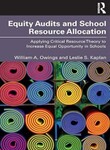
Equity Audits and School Resource Allocation: Applying Critical Resource Theory to Increase Equal Opportunity in Schools
2024William A. Owings and Leslie S. Kaplan
Equity Audits and School Resource Allocation explores how to apply Critical Resource Theory (CReT) to conduct school equity audits, ultimately preparing educational leaders to find equity disparities, engage in more equitable resource allocation in their schools, and improve equal educational opportunity for every student. With case study scenarios woven throughout the book, the authors explore key equity factors, including per-pupil expenditures, poverty, teacher and principal quality, program equity, and achievement equity. They also walk through the process of implementing the 5-step CReT equity audit within a school district or school at any level. Owings and Kaplan also describe the communication and interpersonal factors that equity advocates will need to leverage to gain community support for equity process, considering the data, and rethinking their policies and practices. In today’s education context, the problems of equitably funding public schools and allocating learning resources to generate more equal opportunities and higher outcomes for traditionally underserved children are particularly relevant. This important book is designed for course use in leadership preparation programs, for practicing principals and superintendents, and for educational leadership scholars. [From the publisher]
-
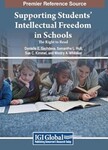
Supporting Students’ Intellectual Freedom in Schools: The Right to Read
2024Danielle E. Sachdeva (Editor), Samantha L. Hull (Editor), Sue C. Kimmel (Editor), and Westry A. Whitaker (Editor)
In today's developing view of education, a disquieting trend looms-the erosion of students' right to choose what they read. This erosion, fueled by an alarming surge in censorship attempts, casts a shadow over the very essence of intellectual exploration. Recent years have witnessed an unprecedented number of challenges aimed at restricting access to books, targeting themes that embrace human diversity, inclusivity, and the tapestry of life itself. As educators, administrators, and scholars grapple with this critical juncture, Supporting Students' Intellectual Freedom in Schools: The Right to Read serves as a comprehensive resource they can turn to for support and knowledge. This book is a call to action, resonating with teachers, school librarians, administrators, and scholars who refuse to let censorship erode the foundations of education. As censorship attempts proliferate, its chapters offer fortification, providing educators at all levels with the tools to safeguard students' intellectual freedom. From the hallowed halls of academia to the vibrant classrooms of K-12, the insights within these pages shape curricula, conversations, and a collective commitment to nurturing minds that thrive on diversity and inquiry. In a world clamoring for unwavering advocates of intellectual freedom, Supporting Students' Intellectual Freedom in Schools is not just a solution-it is a declaration of resolute solidarity in the pursuit of knowledge and the unassailable right to read. [From the publisher]
-
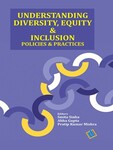
Understanding Diversity, Equity & Inclusion Policies & Practices
2024Smita Sinha (Editor); Abha Gupta (Editor); and Pratip Kumar Mishra, (Editor)
Embark on a journey through the intricacies of diversity, equity, and inclusion with "Understanding Diversity, Equity & Inclusion: Policies & Practices." This thought-provoking book offers a global perspective on the multifaceted nature of diversity, exploring linguistic, cultural, socio-economic, and educational dimensions. From examining policies shaping equitable societies to spotlighting the challenges faced by marginalized communities, each section offers valuable insights and perspectives. Engage with the wisdom of diverse authors as they navigate the complexities of our modern world and inspire change towards a more inclusive and equitable future. [From the publisher]
-
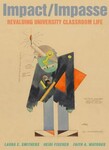
Impact/Impasse: Revaluing University Classroom Life
2024Laura A. Smithers, Heidi Fischer, and Faith A. Watrous
Impact/Impasse argues for the value of everyday life in college classrooms. Quantifiable categories such as high-impact practice, student engagement, and integrative learning have captured the imagination of a generation of higher education researchers, practitioners, administrators, and policymakers. But they miss those mundane moments, or "impasses," that resist capture by metrics while nevertheless shaping student outcomes. Impact/Impasse blends critical theories and ethnographic research—conducted before and during the COVID-19 pandemic—to argue that learning happens in ordinary moments. Indeed, in sharing anecdotes from both in-person and virtual classrooms, the coauthors show how the so-called new normal is little different from the old in its neoliberal attachment to data. Impact/Impasse provides a conceptual and practical foundation for an alternative approach to valuing impacts on their own terms, in excess of quantification. [From the publisher]
A gallery of books by faculty from the Darden College of Education, Old Dominion University. Faculty books are also listed under specific departments.
Printing is not supported at the primary Gallery Thumbnail page. Please first navigate to a specific Image before printing.